Tag: snowbird life

Three Housing Options: Rental, Own or RV?

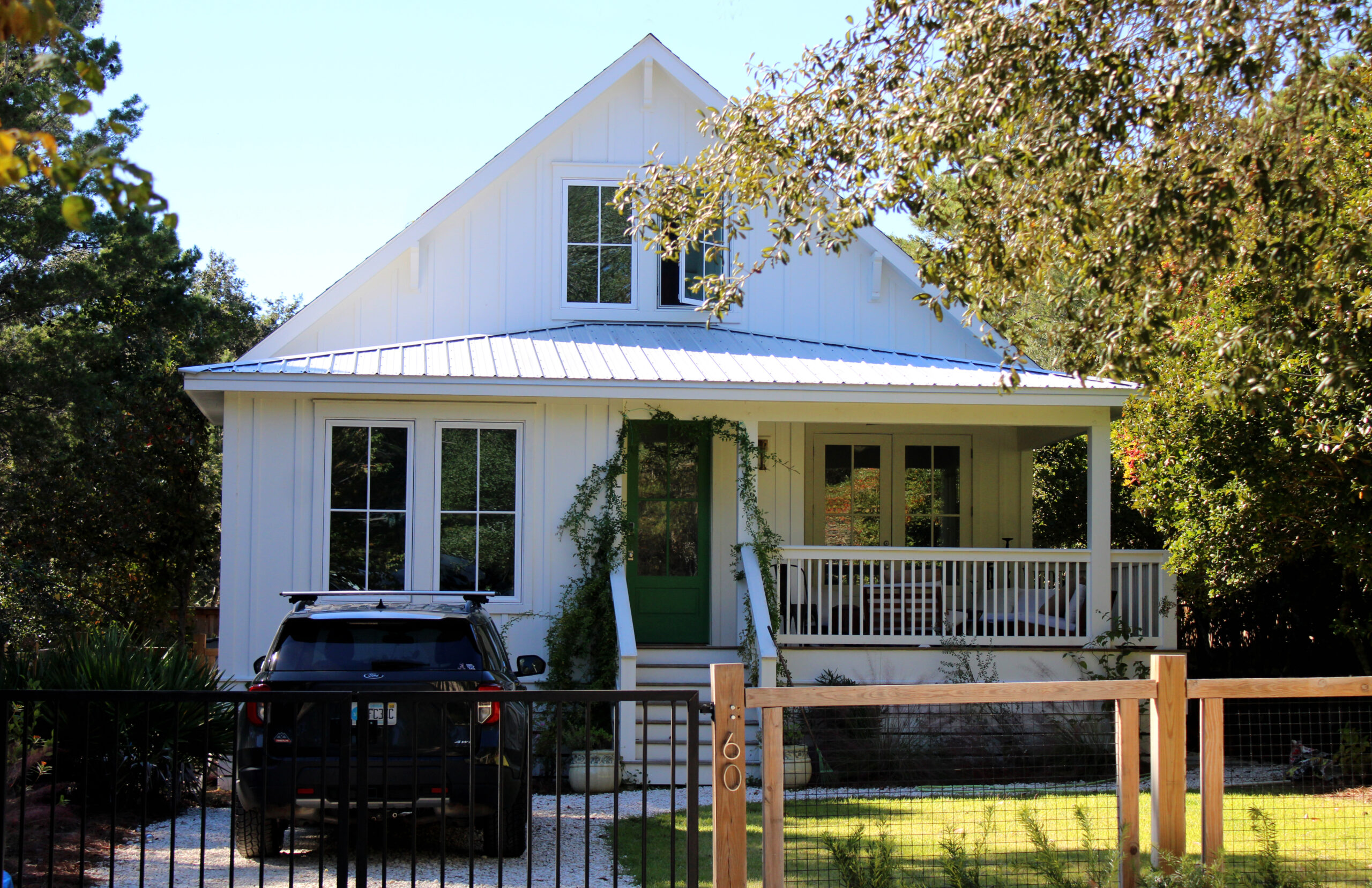
[Santa Rosa Beach, Florida near Point Washington] Three Housing Options: Rental, Own or RV? Firsthand Real Life Briefs from a Popular Web Thread Housing has been and always will be the biggest consideration as well as expense of the snowbird lifestyle. Housing choices dramatically affect 

Extended Season Snowbirds

Extended season snowbirds, as I call them, remain as the spring breakers arrive [Pictured: Pompano Joe's in Miramar Beach, Florida] Extended Season Snowbirds How Everything Changes After the First Week of March For snowbirds who wonder what goes on in their warm weather community after 

Low, Mid and High Rise Buildings

0_9695 -Midlife_Snowbird_20210216

Low, Mid and High Rise Buildings

A Look at Three Very Different Snowbird Housing Options


Definition of

Low Rise Building

Merriam-Webster Dictionary: Having few stories and not usually equipped with elevators

Mid Rise Building

American Heritage Dictionary: Relating to or being a building of moderate height, having usually more than three and less than eight stories

High Rise Building

American Heritage Dictionary:  Relating to or being a tall building that is equipped with elevators and usually has at least six stories


First Things First 

Before even looking at low, mid or high rise housing options, it's important to assess your own and the other occupants' personal needs and abilities. Not just the actual snowbirds, but also any guests or loved ones who are visiting for any length of time. Seriously thinking it over upfront can help avoid selecting an option that just isn't realistic when it comes down to it.

  • How many stairs can you climb? Descend?
  • How many stairs can your pet climb? Descend?
  • Are you able to carry luggage, bags of groceries and other items up or down a flight of stairs?
  • If the stairs are located outdoors, can you navigate them in inclement weather conditions?
  • Do you have a fear of heights?
  • How important is a view?
  • If the elevator/s stop working, can you make it work?

Low Rise Ground Floor

Low rise ground floor units may be in high demand for snowbirds because ground floor units, whether located in a low, mid or high rise building, are ideal for anyone who cannot physically go up or down stairs if there is no elevator. Be sure to check if the unit is ground floor vs. "first floor" or something that isn't actually ground floor. I've seen many buildings that have mixed use space, specifically retail space, on the ground floor and the "first floor" of housing is actually the second floor.

Low rises are not usually ideal for a great view. It will possibly be a worm's eye view or rather flat view of a body of water such as a coastal area. However, if your view is of mountains, woods or a lake, it could work out very well.

Some low rises have outdoor patios, decks or other outdoor space. In the event of building construction, it may cause the outdoor space to close just the same as units with a balcony.

Check to be sure your pet is allowed on the outdoor space or beyond, such as in the grass. Many ground floor units are popular so pets can be taken directly outdoors without having to wait for an elevator or climb stairs, but there may be restrictions.

For security, ground floor units are not typically left open after dark, overnight or when not home.


Low Rise Not on Ground Floor 

Low rise buildings with units not on the ground floor typically do not have an elevator. It's one thing to say climbing stairs is your "home gym," but that can get old fast when you have to carry trash and heavy items up and down, run out to your vehicle, take your dog out and maybe don't feel well.

The older anyone gets, the worse it gets, which means you'll need to eventually find another place.


Mid Rise 

We live in a mid rise condo in the winter and I personally love it. Our top (4th floor) unit is located near an elevator. If the elevator is not functioning, there are three more available from the fourth floor without having to use any stairs. The gulf and pool view from our unit is lovely and when we are on our private balcony, I don't feel like I'm in a fish bowl like some of the other lower floor units in our complex.

In the event of a fire or emergency, I believe a mid or low rise building is the best place to be able to escape.


High Rise 

A high rise building is usually taller than six floors. Skyscrapers are known to exceed 40 or 50 floors, but I'm not getting into skyscrapers here because there aren't likely to be any in most snowbird communities. The view from a high rise is often quite amazing due to the nature of nothing coming in between the building and the scenery. High rises are usually associated with residential, retail, office and other mixed use spaces, which can be very convenient.

Pitfalls of high rises include concerns such as a long elevator ride, especially with a pet, non-functioning elevators and other practical considerations of being forced to use stairs in the event of unavailable elevators. Depending on how many elevators are available, it's likely you will be sharing the space with at least a few others. Odors, conversation or not, loaded utility carts, pets riding with other kids and pets and other awkward situations can arise.

My snowbird friends have tried staying in a high floor unit of a high rise and decided it is not for them. Fear of heights plus a fear of pet/s, people and other items falling or blowing over the balcony are no joke. If you don't have a balcony or outdoor space, that's also a mixed concern because fresh air is important.

Another concern is if you have to walk from central elevators to your high floor unit. The wind at that height can be unreal and it's even worse if the weather is bad.

Overall, a high rise has the most concerns to address in my opinion, but everyone is different and I have a friend who always comes back to her favorite high rise.

Think all of the options through carefully and make an informed decision based on your abilities and personal needs. Never hesitate to do your research of what others have found with the places they stay and why they prefer the choice they've made.


"To know the road ahead, ask those coming back.”

-- Chinese Proverb


DISCLAIMER

The information contained in this website is for general information purposes only. We make no representations or warranties of any kind, express or implied, about the completeness, accuracy, reliability, suitability or availability with respect to the website or the information, products, services, or related graphics contained on the website for any purpose. Any reliance you place on such information is therefore strictly at your own risk.

In no event will we be liable for any loss or damage including without limitation, indirect or consequential loss or damage, or any loss or damage whatsoever arising from or in connection with, the use of this website.

Through this website you are able to link to other websites which are not under the control of Midlife Snowbird. We have no control over the nature, content and availability of those sites. The inclusion of any links or advertisements does not necessarily imply a recommendation or endorse the views expressed within them.


DISCLAIMER

The information contained in this website is for general information purposes only. We make no representations or warranties of any kind, express or implied, about the completeness, accuracy, reliability, suitability or availability with respect to the website or the information, products, services, or related graphics contained on the website for any purpose. Any reliance you place on such information is therefore strictly at your own risk.

In no event will we be liable for any loss or damage including without limitation, indirect or consequential loss or damage, or any loss or damage whatsoever arising from or in connection with, the use of this website.

Through this website you are able to link to other websites which are not under the control of Midlife Snowbird. We have no control over the nature, content and availability of those sites. The inclusion of any links or advertisements does not necessarily imply a recommendation or endorse the views expressed within them.

Ten Years of Snowbirds – Now Vs Then

A great view of the beach and gulf has never waivered as our top priority for our snowbird residence Ten Years of Snowbirds – Now Vs Then A Look Back at Our First Decade of Being Snowbirds The first year we became snowbirds, it was 

North Florida Vs South Florida: Comparison of Weather, Costs, Travel

The Clara Barkley Dorr house, 1871, an iconic home surrounded by orange trees located in the downtown historic district of Pensacola, Florida North Florida Vs. South Florida A Comparison of Weather, Cost of Living Index and Ease of Travel by Vehicle This is the fourth 

Florida Vs Hawaii: Comparison of Weather, Costs, Travel

Drone view of gorgeous coastal waters of Miramar Beach in Northwest Florida. Both Florida and Hawaii are known for miles of scenic coastline and colorful hues

Florida Vs. Hawaii

A Comparison of Weather, Cost of Living Index and Ease of Travel by Vehicle

This is the third of a multi-part series. The first was Florida vs. Arizona and the second is Florida vs. Texas. I already stated in my original post of Florida compared with Arizona and other popular snowbird destinations as follows:

"Let's begin by addressing the obvious. It makes the most sense that if your primary home is on the West Coast that you choose a snowbird community that is also on the West Coast. Right? Investing yourself in an area will be a long term pursuit if you choose wisely and getting there is a huge consideration of where to go. If unsure, then try out different options and see what works best. I highly doubt most snowbirds will repeat a trip from say, Indiana, Michigan or Ohio to Arizona more than once or twice. It's a long, multi-day drive. I'm not a gambler, but if I was, I would put high odds on what I refer to as the big slide. Most snowbirds slide south to their winter destinations.

My region in Northwest Florida primarily attracts people from the Northern Midwest states with a sprinkling of other areas mixed in. Most of my friends and acquaintances drive south on Interstate 65 all the way to our panhandle community. The last thing I want to do is spend more time on the road trip than absolutely necessary, especially with a dog on board.

If an individual or couple does not have pets or a lot of absolutely necessary belongings, flying is a possibility. But, there's more than meets the eye with that and unless you have no other option, such as a medical condition or choosing Hawaii for your winter destination, a road trip makes the most sense for all of the snowbirds I've ever encountered.  

[Flying Snowbirds]

Traveling to your snowbird community is a major factor, but the cost of living and weather are also significant. More than one conversation with future snowbirds has taken place about "Which is better?" types of scenarios. This post is the second of several that will discuss "Which is better?" of two states. Florida is the long recognized gold standard of snowbird destinations. It is the king of the country for popularity attracting seasonal residents such as snowbirds. However, it is not the only option and for many, it's not the best option for their own personal circumstances and needs.

Here I will briefly provide the facts of three topics: weather, costs and ease of travel comparing Florida with Texas. As always, weigh everything carefully and do your own research. The general information provided here is for a basic overview of what to expect and not intended to be specific for my readers." 

[Florida vs. Arizona]
[Florida vs. Texas]


Which is Hotter? Florida or Hawaii?

Florida!

Florida is the number one hottest state in the US with an average temperature of 73 degrees Fahrenheit in 2024. Hawaii is ranked number four with an average temperature of 66.9 degrees Fahrenheit in 2024. In-between is Louisiana and Texas, followed by Mississippi, Georgia, Alabama, South Carolina, Arkansas and Oklahoma rounding out the top ten. Alaska is the least hot with an average temperature of 27.8.

Winters in Florida are mild and summers are hot and humid. July is the hottest month of the year in Florida, averaging 90 to 92 degrees and frequently exceeding 100 degrees. February is the coldest month in Hawaii with an average temp of 72 degrees. The hottest month in Hawaii is September with an average temp of 80.7 degrees Fahrenheit. Hawaii is very consistent in average temperatures and has never fallen below freezing (32 degrees Fahrenheit) nor risen above 100 degrees.

Source: Climate at a Glance, StateWide Mapping - National Centers for Environmental Information

Source: https://www.usclimatedata.com/climate/united-states/us

Source: https://worldpopulationreview.com/state-rankings/hottest-states

Although both Florida and Hawaii are humid, Florida edges out Hawaii with an average relative humidity of 74.5% vs. Hawaii with 73.3% average humidity. Alabama is the most humid state at 77.1%, followed by Florida, Louisiana, Mississippi, Hawaii, Iowa, Michigan, Indiana, Maine and Vermont rounding out the top ten. Nevada is least humid with an average 38.3% rate, which makes it the most arid of all the states.

Humid heat always makes temperatures feel hotter and more stifling because the high moisture in the air makes it difficult for sweat to evaporate from human skin. However, humid temperatures are generally better for sinuses and can decrease symptoms of asthma and allergies. In a dry climate, you may sweat more than in humid heat, but may not notice because the moisture evaporates from skin more quickly. It is easier to become dehydrated in dry climates.

https://worldpopulationreview.com/state-rankings/most-humid-states


Which is Sunnier? Florida or Hawaii?

Hawaii!

Florida is known as the "Sunshine State," however, Florida is ranked number nine for sunshine, vs. Hawaii which is ranked number five.

Florida has an average of 66% sunny days per year and an average of 101 clear days and 2,927 sunny hours, making it ninth of the states in the US. Data was measured in Tampa, Florida located on the Western Peninsular side of Central Florida. Hawaii has an average of 71% sunny days per year and an average of 90 clear days making it fifth of the states in the US. Data was measured in Honolulu, Hawaii located on the island of Oahu. Data is not available for the number of sunny hours in Hawaii.

For comparison, Arizona is by far the top state in the US for sun exposure and has the highest percentage of sunny days at 85% and an average of 193 clear days per year. Arizona's average number of 3,806 sunny hours per year is followed by Nevada and New Mexico respectively with 79% and 76% to round out the top three. Data was measured in Tucson, Arizona located on the southern border.

States with the highest percentage of sunny days in descending order are: Arizona, Nevada, New Mexico, Colorado, Hawaii, California, Oklahoma, Wyoming, Florida, Georgia, Utah, Kansas, Idaho, South Carolina, South Dakota and Virginia. Texas, Arkansas, Mississippi and Nebraska each have an average of 61% sunny days per year. Alaska has the least percentage of measured sunny days at 41%.

      • “Sunlight Percentage” indicates the average annual percentage of time between sunrise and sunset that sunshine reaches the ground, based upon the past several decades of weather data.
      • Each state’s sunlight was measured using a specific test city, indicated below. Averages in other parts of the state may vary.
      • A small number of states lack sufficient data in one category or another

    Sources: https://worldpopulationreview.com/state-rankings/sunniest-states


Which is More Intense? Florida or Hawaii Sun?

Hawaii!

The UV index is a measure of the strength of ultraviolet (UV) radiation from the sun. Hawaii and Florida both have very high UV rays; however Florida is rated as a "ten," and Hawaii is an "eleven." Hawaii is highest of the United States, ranking number one, followed by a four way tie of Florida, Arizona, California and Nevada with each rated a "ten." Florida has a 3,636 average daily UV Irradiance 2015. No data for average daily UV Irradiance 2015 is available for Hawaii. With the highest score of 11, Hawaii is the state closest to the Equator and thus has the most intense UV rays. Alaska is the lowest with a score of one.

Skin cancer, premature aging and other health problems are all linked to prolonged UV exposure of the sun. Precautions such as using sunblock and avoiding sun and UV exposure should be taken to lower the risk of sun-related health issues. 

  • UV Index values shown are averages for the noon hour. The UV Index at any given time and place may be higher or lower depending factors including the time of day, cloud cover, and altitude.

Source: EPH Tracking

Source: https://worldpopulationreview.com/state-rankings/uv-index-by-state


Which is Cheaper? Florida or Hawaii?

Florida!

The Cost of Living Index indicates Florida is much more affordable than Hawaii. Although Florida is slightly more expensive than the national average, Florida's Cost of Living Index is 102.8 and Hawaii's score is much higher than anywhere else in the United States with a score of 186.9. Information included here is the most current "Composite Cost of Living Index 2024 Annual Average" published by the Missouri Economic Research and Information Center.

The State of Hawaii is by far the most expensive state due to the whopping cost of living index of 186.9. For comparison, the state with the lowest score for 2024 is West Virginia at 84.1. My home state of Indiana is a reasonable 90.5 which is similar to Michigan's 90.4 and Iowa at 89.7. Other cold weather Midwestern states have scores as follows: Wisconsin, 97.0; Minnesota, 95.1; Illinois, 94.4; Ohio, 94.2 and Missouri, 88.7.

Northeastern states are all very high cost of living scores as follows: Massachusetts, 145.9; Washington D.C., 141.9; New York, 123.3; Maryland, 115.3; New Jersey, 114.6; Vermont, 114.4; New Hampshire, 112.6; Connecticut, 112.3; Rhode Island, 112.2; Maine, 112.1; Delaware, 100.8 and Pennsylvania, 95.1.

Northwestern states range from a high of California, 144.8; Alaska, 123.8; Washington, 114.2; Oregon, 112.0, Utah, 104.9; Colorado, 102.0; Idaho, 102.0; Nevada, 101.3; Wyoming, 95.5; Montana, 94.9; Nebraska, 93.1; South Dakota, 92.2; North Dakota, 91.9 and Kansas, 87.0.

Source: https://meric.mo.gov/data/cost-living-data-series


Which is Easier to Travel by Vehicle? Florida or Hawaii?

Florida!

Because the State of Hawaii is a cohesive group of 137 volcanic islands located in the Pacific Ocean approximately 2,000 miles southwest of the U.S. mainland, it is not accessible by vehicle. The only methods of transportation to Hawaii are by air or water. Therefore there are many travel considerations that are addressed in my previous post: Flying Snowbirds. The island of Oahu is home to 2/3 of the residents of Hawaii; however, intra-island transportation may be necessary depending on the logistics of flights and island destinations.

Florida has a distance of about 450 miles north to south with about 400 miles in the East/West upper portion of the state. No other state in the continental US can come close to Florida's 1,146 miles of shoreline. The peninsula of Florida is surrounded by the Gulf of America and Atlantic Ocean. Florida is almost 66,000 square miles and does not have any international border.

Hawaii's miles of shoreline is fourth overall with 750 miles of Pacific Ocean shoreline. California is third ranking between Florida and Hawaii with 840 miles of shoreline. Hawaii has zero miles of international border and is fourth smallest for land area with 10,931 square miles. Alaska is by far the largest US state with just over 665,000 square miles and 6,640 miles of Pacific Ocean shoreline. 

Florida has three major North/South interstate highways that will take you where you want to be. 

Interstate 95: Carolinas and Eastern Peninsular Florida

Interstate 75: Georgia, Central and Western Peninsular Florida

Interstate 65: Northwest Florida and Alabama


"After so many years struggling to keep up with you, I finally realized we’re not even running the same race.” 

--Scott Stabile, American Author, Speaker


DISCLAIMER

The information contained in this website is for general information purposes only. We make no representations or warranties of any kind, express or implied, about the completeness, accuracy, reliability, suitability or availability with respect to the website or the information, products, services, or related graphics contained on the website for any purpose. Any reliance you place on such information is therefore strictly at your own risk.

In no event will we be liable for any loss or damage including without limitation, indirect or consequential loss or damage, or any loss or damage whatsoever arising from or in connection with, the use of this website.

Through this website you are able to link to other websites which are not under the control of Midlife Snowbird. We have no control over the nature, content and availability of those sites. The inclusion of any links or advertisements does not necessarily imply a recommendation or endorse the views expressed within them.

Florida Vs Texas: Comparison of Weather, Costs, Travel

Florida features 1,146 miles of coastal shoreline and Texas has about 367 miles of shoreline. [Gulf Coast of Northwest Florida, Miramar Beach, Florida] Florida Vs. Texas A Comparison of Weather, Cost of Living Index and Ease of Travel by Vehicle This is the second of 

Florida Vs Arizona: Comparison of Weather, Costs, Travel

Florida Vs Arizona: Sun and heat are high in both states which makes each a great choice for outdoor activities [Maravilla Resort in Miramar Beach, Florida] Florida Vs. Arizona A Comparison of Weather, Cost of Living Index and Ease of Travel by Vehicle Let’s begin 

The Snowbird Housing Scramble

In a competitive snowbird housing rental market, it's essential to know your top priorities [Seaside Florida]

The Snowbird Housing Scramble

Top Three Essentials: Planning, Communication and Decisiveness

This season there has been a major scramble to secure snowbird housing for next year. Don't be fooled, it's cut throat in an insidious way. A casual question, "Are you returning next year?" might be the opener for an intel mission to help someone seeking a place. Be careful not to overshare your unit info or future plans.

Years ago, I was naive and thought the owner/property manager of our beloved rental would shield us from someone else swooping in to scoop it up. Upon meeting snowbirds on the beach, I didn't go out of my way to hide the location of our lovely spacious unit, but didn't realize there was zero protection to save it for us. I mistakenly assumed we had a right of first refusal. We didn't.

It was a hard lesson after several years of returning to the same lovely unit that we learned "our" condo was reserved for the next year right 'out from under our nose' as they say. We were bewildered and angered that there were no safeguards for our loyalty. Ironically, this year it happened to my Wisconsin snowbird friends. An online third party reservation for next year ruined their plans to return to the pet friendly two bedroom unit they came to love for it's fantastic gulf view with swaying palms. 

This is how it all turns into a scramble to secure suitable snowbird housing. Like a game of musical chairs, instead the stakes are much higher.

For us, the property manager offered to move us across the hall to a matching layout of our three bedroom, three bath rental for the following season. The main issue was we felt the decor was not our style. It was a mix of dated items and newer furnishings including lovely off white sofas and easy chairs. Reluctantly, we accepted the change and were pleasantly surprised to discover the western view of the new place offered stunning sunsets through the entire wall of windows. The unit we came from had parking lot views and lovely Eastern sunrises, but the sunsets were even more appealing. We stuffed the dated wall art, green and yellow throw pillows and a zebra-covered chair into an interior area where we didn't have to look at them and put them back upon departure. We returned to the condo several times until we eventually bought our own place.

My Wisconsin friends have been searching for their next rental for weeks. They've found several options, but to date they've not booked anything. Some units were priced well above market value, others were not actually available despite being promoted as such. It is likely my friends will be making several compromises to obtain a pet friendly unit in the same community as their current place. To stay within budget, they toured a larger 3/3 compared with their current 2/2, but it does not have the gulf views nor updated bathrooms. However, unbeknownst to my friend, this unit's current snowbird renewed and my friend was actually on the wait list. It wasn't meant to be and she was on the fence anyway. Another potential unit features ground floor gulf views with a patio. However, the unit does not have a way to contain the dog outdoors and it's adjacent to a very high traffic area of the complex, which lacks privacy. My friends are gambling that as the year progresses, some rentals may come back on the market.

One mistake I've personally witnessed is not being fully prepared to commit when an available unit comes up for consideration. In a competitive rental market, it is imperative to plan ahead and fully establish what your top priorities are as well as your deal breakers. If your primary objectives are Jan/Feb dates; pet friendly; decent view; 2/2 and within or near budget, then you must be ready to book immediately if the prospect covers most of your criteria. This isn't the time for hardball tactics such as insisting on personal tours, negotiating rates or asking the owner to replace the mattresses and update the decor. If the unit meets most of your desired objectives, it may be the best option vs. not having any options because of waiting too long to commit and someone else takes it.

Don't overlook the value of solid communication with your property manager or owner if you are relatively happy with your current rental and want to return again. Many snowbirds wisely develop a strong line of communication with the owner of their rental. They communicate regularly and with clarity so there's no mixed messages. If you want to return, say so. If you already know you found and reserved something else, be courteous and let the owner know so they can put their energy into securing new prospects. Whatever you do, don't get ahead of yourself and let go of your existing rental until you are absolutely sure your new contract is fully executed.

Make a thorough list of questions that pertain to each property you consider. Write down the questions, answers, who you spoke with and the date/time. It's easy to get flustered when searching something as important as housing. You may go in circles for weeks or months until you find the right place. Being disorganized will make if more difficult to commit when you do find a place that meets most or all of your needs. Your priorities may change over time as well. If you have your heart set on criteria that may not be realistic for what's available in your budget, it's time to reevaluate. Don't forget to ask for the cancellation policy. Upon discussion you might not be comfortable with it and never forget the person wanting you to book your reservation may not tell all of the facts. It's imperative to get the cancellation information in writing. Be firm, don't let your emotions get in the way of good business sense.  

Finally, a word of advice to never forget this fact: if the property is sold to a new owner your contract is likely to be voided. The new owner will not have any legal obligation to fulfill it. Hopefully they would want to, but it's a scenario that could destroy your plans. Always have a Plan B and Plan C. Best wishes as you navigate your housing, it's worth it, but it does take time to position yourself for a successful future snowbird season. 


"Planning is about bringing the future into the present so that you can do something about it now.” 

--Alan Lakein, American Author


DISCLAIMER

The information contained in this website is for general information purposes only. We make no representations or warranties of any kind, express or implied, about the completeness, accuracy, reliability, suitability or availability with respect to the website or the information, products, services, or related graphics contained on the website for any purpose. Any reliance you place on such information is therefore strictly at your own risk.

In no event will we be liable for any loss or damage including without limitation, indirect or consequential loss or damage, or any loss or damage whatsoever arising from or in connection with, the use of this website.

Through this website you are able to link to other websites which are not under the control of Midlife Snowbird. We have no control over the nature, content and availability of those sites. The inclusion of any links or advertisements does not necessarily imply a recommendation or endorse the views expressed within them.

Under Construction: Thank You for Your Patience

Always follow safety precautions, never interfere with the work and compliment the efforts and results Under Construction: Thank You for Your Patience The Realities, Do’s and Don’ts When Your Complex is Under Construction Winter is the off season for the vacation rental markets that snowbirds