Fonville Press and Alys Beach, Florida were a 2019 destination thanks to social media Find the Best of the Best with Social Media Impact of Social Media on Snowbird Communities Social media is defined as the specific ability to share opinions, photos, places, events and …
Ice bowls are fun for all ages and abilities, and fleetingly beautiful centerpieces for any social gathering Snowbird Style Entertaining How to Make an Ice Bowl Centerpiece Pink hyacinths, grape hyacinths and yellow daffodils Ice bowls are a festive way to make a big …
The beautiful Champagne Poinsettia is lighter, easy to make and perfect for a festive holiday party or brunch
Snowbird Style
Four Classic Holiday Beverages
Snowbird holidays, whether in your Northern or Southern home, are extra special with the following four classic holiday beverages. Nothing says warm and cozy like rich, creamy eggnog, toasty hot chocolate or warm mulled wine. Serve a beautiful Champagne Poinsettia for your holiday brunch or festive cocktail party. No special equipment is needed to make these easy and impressive beverages, but fresh, high quality ingredients are what make them "snowbird style." The recipes are inspired by a community outreach class my husband and I attended just for fun. Although the beverages are traditionally associated with the holidays, they're terrific throughout the winter season. Cheers!
Easy Mulled Wine
Recommended: Malbac Wine
Four servings
One 750 ml bottle of red wine, such as Malbac, Merlot or Cabernet Sauvignon
3 parts Amaro di ANGOSTURA® bitters
Simmer one 750 ml bottle of red wine with a ratio of 10 parts wine to 3 parts Amaro di ANGOSTURA® bitters. Serve warm in a heat-resistant glass.
Hot Chocolate
Start with the highest quality ingredients, such as crushed candy canes, freshly ground cinnamon and nutmeg and freshly squeezed citrus juices
Recommended: Dark Chocolate
One Serving
6 oz. whole milk
1 oz. chocolate, such as milk or dark chocolate, chocolate syrup or a powdered mix
1 1/2 oz. liquor such as bourbon or brandy
Bring milk to a simmer, stirring frequently, then add your favorite chocolate. The more decadent the chocolate, the better. Remove from stove top and add liquor. Serve in a coffee cup or Irish coffee mug.
Garnish with toasted marshmallows, crushed candy canes, freshly ground cinnamon or nutmeg.
Champagne Poinsettia
Recommended: Champagne or Prosecco
One Serving
Lighter in alcohol and beautiful, this popular holiday drink is perfect for a festive evening or brunch anytime of the year. Inexpensive to moderately priced champagne is fine because the cranberry juice dominates. Optional: add half an ounce of vodka to increase the alcohol intensity.
3 oz. Champagne, Prosecco or sparkling wine
3 oz. cranberry juice
one-half oz. orange liqueur
5 - 6 cranberries, frozen
Chill liquid ingredients. Mix liquids together, stir and serve in a champagne glass, martini glass or wine glass. Garnish with frozen cranberries.
Eggnog
Eggnog can be prepared in advance to allow flavors to develop. It can be kept refrigerated for months or longer.
One Serving
2 oz. liquor, such as rum, brandy, rye
1 oz. half and half
1 oz. demerara cane sugar syrup (2:1 sugar to water)
1 whole egg
Whisk egg, then whisk in the half and half, followed by the sugar and then liquor. Serve in a chilled Irish Whiskey mug and garnish with fresh shaved nutmeg or cinnamon.
Eggnog Batch Recipe
Recommended: Best results with a blender
12 Servings
24 oz. liquor, such as rum, brandy, rye
12 oz. half and half
12 oz. demerara cane sugar syrup (2:1 sugar to water)
12 whole eggs
Mix eggs in a blender, then blend in the half and half, followed by the sugar and then liquor. Serve in a chilled Irish Whiskey mug and garnish with fresh shaved nutmeg or cinnamon.
Snowbird Holiday Decor High Impact, Space Saving Decorations for Your Snowbird Home Snowbirds are notorious for lacking storage space in their warm climate homes, not only for everyday items, but especially for limited use Christmas and holiday decorations. Savvy snowbirds who are away for …
Snowbird meals are generally much simpler due to necessity from using fewer ingredients and a very limited selection of cooking appliances SNOWBIRD KITCHEN APPLIANCES, GADGETS You’re spending your first week in your snowbird rental and have an incredible list of meals you plan to create …
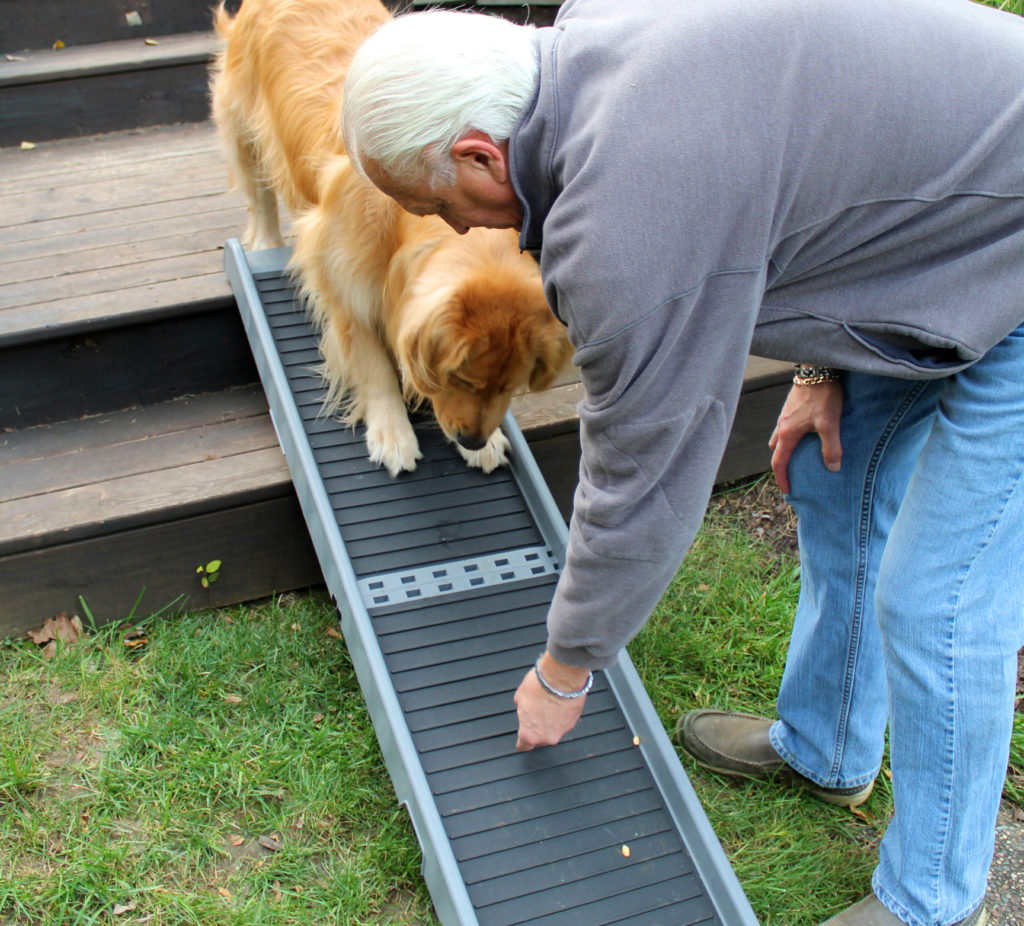
Ramp training was essential for Bodie to access our vehicle
Snowbird Pet Prep
As the leaves turn vibrant colors and the weather changes, your pet's preparations are likely in the advanced stages of completion. Every snowbird season the needs of your pet should be reassessed based on their physical and emotional well being, as well as your own. You and your pet will be less stressed if you are both adequately prepared for the journey well in advance. There are four major areas of evaluation prior to departing for your snowbird destination.
Four Key Areas of Evaluation
Bodie needed additional leash training with his new harness
1. Daily Necessities
--Food, treats and nutritional supplements
--Tags and licenses
--Medication, heartworm, flea / tick prevention
--Leashes, collars, restraints
--Toys, bowls, bedding
--Brushes, combs, shampoo, grooming supplies
--Flashlights, reflectors and specialty night lighting
--Hotel to / from your homes: steps, elevators, refrigeration for food / meds, etc
--Your seasonal home: steps, elevators
--Linens / sheets / furniture covers
--Monitoring systems: webcam and / or other devices
Evaluate and Organize
In just four years, we've experienced the full range of emotional and physical limitations. The first year our 11 year old Golden Retriever, Reilly, was advanced in age and seriously ill with an end-of-life kidney condition. She was unable to climb steps and lacked the energy to walk except short distances. Reilly was on the complete opposite end of the spectrum compared to our 10 month old Golden Retriever puppy, Bodie who made his debut our second season. Bodie is now a fully grown, 90 pound, rambunctious two-year-old whose needs are ever evolving, including training and retraining.
Skills / Training
Bodie, being larger and stubborn, basically calls the shots, especially when walking on a leash. He was able to wiggle right out of the heavy duty harness we originally used, so we tried many more harnesses looking for one that is escape-proof. Finally, we found a rope-style harness that works for us. I liken it to the same principles as ranchers use with calves. Because our Northern yard is fenced in, it becomes necessary to re-train on a leash every Autumn when the weather cools down so we are ready for our snowbird home where every visit outdoors is on a leash.
There is nothing more stressful than worrying about your beloved pet escaping in an unfamiliar area. So, we also purchased an e-collar as a back up. We do not use the shock setting because the vibration mode is very effective, but it's cumbersome to put the collar on/off and it is not intended for the dog to wear all the time. When the e-collar appears, our dog's behavior normally improves just by looking at it.
Other skills such as ramp training and improved socialization may be necessary. With a dense population of people with pets running the gammet of all personality types, it can become very dicey when encountering them in public spaces. Think ahead to give enough time to address all the changes for you and your pet each season.
Prior to our first season, we purchased a pet ramp to assist elderly Reilly with getting into our sedan. But, upon testing it, we realized due to the angle of the passenger doors, it was impossible to use the ramp. So Reilly had to be boosted into the car.
After traveling in the sedan the first three seasons, we purchased a full sized SUV so there would be more space. Despite being young, Bodie's hind legs also caused him to struggle and he needed a boost, which was increasingly difficult during two full days of travelling. Even with the new vehicle, we found the original ramp was impossibly steep. So we purchased the longest ramp from a well known manufacturer and it is still a bit steep. Of course, organizing the cargo space is a new concern so the ramp will fit into the vehicle with a pass-through to get to the front where Bodie wants to be right next to us. We will be continually testing prior to departure.
Pet Vehicle Restraints
Best safety practices for everyone will make the trip less stressful, so an adjustable pet barrier will prevent Bodie from entering the driver area. We made sure it fits and will function properly in case any adjustments need made or worse, that it doesn't work.
Hotel to / from
Every year we book the same pet-friendly hotel for the trip to/from our snowbird destination. Not only is it a great location at a reasonable price, each room has a mini refrigerator and microwave. Reilly, with her serious kidney condition was only able to eat ground turkey and rice, so it was a godsend for us to be able to keep her food in the room with us and heat it up for her. Even Bodie, who is a healthy 2 year old, had stress-related travel issues. As in explosive diarrhea the second day in the car. So, this year we will be bringing turkey/rice, yogurt and vet issued pro-biotics so he is less likely to become ill from the trip. And we already know we have a fridge at the hotel.
Your Seasonal Home
Steps/Elevators
We carefully chose our snowbird home because the building has an elevator, which worked out great for Reilly, who had physical limitations and would never be able to climb steps to the third floor multiple times per day. Ironically, Bodie is able to climb steps, but refuses, so we ride the elevator with him as well.
Flooring/Furniture/Covers
Another big consideration: chewing. Puppies chew everything and anything, so it was a major concern for us. We brought a supply of a popular taste deterrent in a spray bottle and provided plenty of his own items to distract from the desire to chew the furniture in our snowbird rental. It helped tremendously with tile floors throughout -- accidents were much less stressful -- and much of the furniture is constructed of metal.
If you are renting your snowbird home, bring your own bed linens and sheets or furniture covers. Pet fur may not only be contractually a problem, but you're much more likely to not be welcomed back if the furniture and linens show evidence of a pet staying there.
Monitoring Systems
The first year when Reilly was so very ill, I dreaded leaving her alone at our condo because I worried she was scared, barking or crying and upset. Yet we couldn't live our life staying in the condo with her 24/7. When an irritated neighbor told us she was "barking incessantly" one evening while we were out, I didn't believe she had the strength for that behavior, but we couldn't prove otherwise. After just three weeks in our snowbird home, sadly, our beloved Reilly crossed the rainbow bridge. In hindsight, I wish we had brought our webcam and set up the computer to monitor the dog and condo while away. For Bodie, we had the web camera facing the entry door and logged in to periodically check on our puppy, who thankfully sleeps next to the door the entire time we are out.
This check list is designed to provide an easy reference to prep yourself and your pet for the upcoming snowbird season. Everyone's individual needs will vary from season to season, of course.
"A good plan implemented today is better than a perfect plan implemented tomorrow."
--General George Patton, General of the United States Army
Our hosts’ welcoming front porch set the stage for their home which looks like it belongs in a magazine ROAD TRIP REPORT Road trips and summer are a perfect pair. And it only gets better when visiting snowbird friends in their Northern homes. So …
Provide fresh fruit/nuts/snacks within easy reach for guests Snowbird Hospitality Snowbirds who choose to host guests for a stay in their warm climate homes generally are great hosts and hostesses. Whether hosting guests for a day or a week, allow yourself enough time to be …
On the way home our third season, we decided to change our transportation to a full sized SUV for maximum cargo space and easier accessibility for our large dog
Many snowbirds retreat to their warm climate homes in October and November, which means now is the time to get prepared for the countdown to departure.
1. Project lists
If there's unfinished business at home, figure out your projected timeline to complete them, bring the projects with you or delay them until you return. By being proactive, you'll be less stressed out later. Yard/landscaping, home
Don't forget to update your pet tags
repairs, maintenance, roofing, decluttering, correspondence, files, bills, banking, improvements, hobbies, and more to name a few.
2. Your Home Team
Contact your trusted friends, family and neighbors to help you while you're away. Who will be handling your mail? Houseplants? Packages/deliveries? Snow plowing? House sitting? Unexpected problems? Work ahead and let your team know when and how they will be needed. Just because they helped you in the past doesn't guarantee they'll be available or willing to help again. Set up a plan A, B and C if you can. Of course, the more you can do yourself, the better. Set aside a budget to pay for the necessary help unless you have someone to trade duties with. If it's someone who insists they won't take money, send them a gift card. It's important to make them feel appreciated. No one wants to feel used or taken for granted. Don't forget to
give them access instructions for your home, including security codes.
3. Order Supplies
Don't forget to update your pet tags and medications such as heartworm/flea/tick preventatives. If you have "snowbird" business cards, update and reorder if needed. If you use checks, restock your supply. Same for your prescriptions and anything else that may be important.
4. Appointments
Do you have doctor's appointments, vet appointments and other unfinished business such as meetings with your tax and financial advisors? Get them scheduled and done at least a month or several weeks in advance of your departure. Don't forget to schedule one last hair appointment before you depart. If possible, schedule upcoming appointments for the first part of your snowbird season and get those out of the way.
5. Organize
Merge, purge and weed out your stuff. Donate to charity or have a garage sale. It will feel better to lighten the load in advance so you don't have to think about it while you're away and it won't be staring you in the face when you return home in the spring. I'm not one who is a natural organizer, but being organized is fundamental for any snowbird. My favorite organizational tool? Plastic storage bins in all shapes/sizes. Photo albums, family keepsakes, toiletries, linens and seasonal items all reside in storage bins. Don't forget to label them. Also, purge, back up and organize your passwords, computer and electronic files as well.
6. Security
Now is the time to check your existing security systems and consider increasing your security. If you already have a security monitoring system, consider upgrading it before you depart, such as adding more glass break sensors. Other security measures include more interior and exterior cameras and installing deadbolts to any exterior door that doesn't already have one. Motion sensor lights are another good option. If you haven't already installed a keyless entry to the garage, do so now. If it's available through your third party security vendor, add an alarm to your sump pump for peace of mind.
7. Pay Outstanding Balances
If you rent your snowbird home, outstanding balances will typically need paid anywhere from 60 to 90 days in advance. Review your contract for any other details that may be pertinent. The goal is no surprises. Be sure to stage the folder containing your rental agreement and proof of payment along with your other important documents that need to move south with you.
8. Book Your Hotel
Reserve your hotel for the trip both down and back well in advance.
Make social plans for the time leading up to your departure
Because we travel with our Golden Retriever, we book our favorite hotel for the half way point to our snowbird destination. They have a limited number of dog accessible rooms and we don't want to miss out. Not only does the staff remember us, the rooms have mini refrigerators and microwaves and the hotel has a fantastic breakfast buffet. Plus they charge a very reasonable fee for the dog. Not every place welcomes pets and for both us and our dog, knowing what to expect makes the trip slightly less stressful.
9. Finalize Social Plans
Check your calendar and make your social plans with friends and loved ones to avoid a last minute scramble. Our first season, we hosted a farewell lunch for family several days before we left. It was the last time we would see them for awhile and it turns out it was the last time they ever saw our beloved Golden Retriever, Reilly, who sadly passed away while we were in our southern home. By making plans before leaving, you and they will tend to cope better when away for an extended time. This year we made plans to meet up with our snowbird friends on Labor Day weekend -- before everyone heads back to their winter homes again.
10. Prep Your Vehicle/s
Thoroughly go over your vehicle and determine what maintenance needs done. Change the oil, purchase new tires if they are less than 50% and get a general check up. Don't forget about winterizing vehicle/s being left behind. Take photos of your odomoter readings and put the keys to your vehicle/s in a safe place where only you know where they are. Don't provide temptation for theft or anyone else. Be prepared for possible deflated tires and dead batteries upon your return.
On the way home from our third season, we decided it was time to switch from a sedan to a full-sized SUV for increased cargo space and to help our furry passenger, Bodie, more easily enter/exit. Bodie wouldn't climb into the sedan without an assistive boost each and every time we made a stop, so his needs were an important consideration. Eight months ahead of our departure for season four we brought home our "beast." This gave us enough time to evaluate and purchase additional accessories including a pet barrier as well as a new ramp for rear entry so our dog can easily enter/exit.
11. Prep Your Supplies
I pack reduced quantities of herbs, seasonings and spices; wooden spoons, spatulas, mini server spatulas and flippers, serrated knives and just about anything else that can fit into one shoe-box sized plastic storage bin. If you have favorite custom spice rubs and blends, pre-make an appropriate quantity before leaving home so you aren't hauling 14 ingredients only to use a small amount of each. Canning jars are excellent for transporting smaller amounts of liquids if you can avoid breaking them during transport.
12. Notifications
Prepare a contact sheet for your closest friends and loved ones with your address, dates of travel and any pertinent details. Distribute it well in advance of departure so you don't have to worry about it at the last minute. Notify all other appropriate businesses and entities, such as your newspaper and change of address for your mail. Don't forget any other delivery services who may need to be put on a seasonal hold. If you can temporarily stop your cable tv service, it could save some money.
13. Shipping
Get your packages ready several weeks ahead of your departure and avoid the last minute crunch that inevitably happens as departure approaches. Because we are self-employed, we have computers, a printer and products, including parts/accessories that are shipped in advance. Getting the timing right is an art form, but is much smoother when you are prepared.
14. Close Your Home
Last, but not least, clean and prep your home for a season away. If your home will be unoccupied, turn off the exterior water line. Adjust the blinds and thermostat, set up your lighting self-timers, turn on the security alarm and trust that your systems and pre-planning will pay off for another successful season away.
"When you grow up by the sea, you spend a good deal of time looking at the horizon. You wonder what on Earth the waves might bring -- and where the sea might deposit you -- until one day you know you have lived between two places -- the scene of arrival and the point of departure."
Home Vs. Away It’s easy to get caught up in the thrill of your snowbird home–the warmer weather, prospects of a new community, new friends and the alluring amenities of your home whether it is the beach, pedestrian lifestyle, shopping / restaurants and more. Parking, …