Tag: before departing

Creative Vehicle Options for Snowbirds

Seville Quarter, downtown Pensacola, Florida Creative Vehicle Options for Snowbirds Car sharing and multi-month leases As snowbirds age, transportation to and from their winter communities is increasingly a concern. Perhaps a solo or snowbird couple want to fly to their destination, but aren’t aware of 

Pre Check-In List for Snowbirds

A huge part of the road trip is planning the stops, including the small town road side stands such as Papas in Brantley, Alabama Pre Check-In List for Snowbirds Avoid Surprises and Hassles by Verifying in Advance of Arrival As both an owner and a 

Packing 101: Quick Tips for a Shorter Stay

Snowbird Four Week Packing Timeline
Plan your travel bags so each person knows exactly how much space they are allotted for clothing, kitchen, bath, office and pet/s.

Packing 101

Quick Tips for a Shorter Stay


If you're like me, packing is a pain and a task I have yet to perfect and finesse despite years of travel. If it's a shorter stay of a long weekend or just a couple of weeks, it makes it even worse because I wrongly think "It's only a couple weeks," then forget items. My husband forgot to bring items related to our business, largely because of the "I've got this, no need to refer to my long-established packing lists." Everything is at risk of being forgotten, it's all about the details. Establish your systems, then stick to them.

Items I recently forgot were a food scale and cough drops. Typically, I don't get sick or need OTC types of products at home or anywhere else. However, while away I developed a cough that would not quit and was making me miserable. Cough drops are readily available at any pharmacy, that isn't the point. What is irksome is we literally have two one-pound bags of 500 cough drops and three food scales at our primary home -- there is no need to buy more. Our supplies will last for years. None of this is a major problem, it all adds up to minor inconveniences that no one wants to have to deal with while away, especially for a shorter stay. Shorter stays fly by as it is without searching and shopping around solving issues of forgotten items.

I purposefully didn't bring much cash, which turned out to be a poor choice. Cash is helpful just about everywhere including tipping your hotel staff, the cleaning staff at your southern place, beach and service attendants and small businesses who may or may not accept plastic. If you bring too much cash and don't spend it, terrific! It's not so convenient to get cash when you unexpectedly need it.

Overpacking is another common issue. Once again, I brought too many pairs of jeans and three jackets for a two week stay. Two of each would have been fine. Too many shoes is another common yet bulky item my husband and I both overpack. One pair of comfortable slip-on shoes, such as flip flops; one exercise or walking shoe and one versatile dress-it-up-or-down shoe is enough. The balance is to have an "heir and a spare" so that if it rains or an item gets dirty, you have an alternate option while the dirty/wet item is washed and dried.

I've included three areas to focus when packing for a minor time away such as a long weekend or a few weeks, but the same principles also apply to longer stays.   


First and Foremost, Pack Dual Purpose Items

Examples include:

Toilet paper doubles as tissue paper in a pinch

Beach towels are, of course, great at the beach and they double as a throw blanket on a cooler evening as well as for the road trip

Olive, coconut or vegetable oil; butter or margarine. There's no need to bring every kind of oil/spread you own

Aluminum foil functions for both hot or cold applications, plastic only functions for cold uses

All-purpose seasonings: blend equal parts granulated onion and garlic instead of one container of each; bring one meat rub, specialty or all-purpose seasoning, not all of the individual ingredients to create your own spice blends while away

Animal crackers and dry cereal such as Cheerios double as snacks for you and your pet

Rice/Pasta: Long or quick cooking rice, not both. Pasta should be limited to one or two types that you consume most often

Beverages: Focus on the essentials such as coffee and purified water. If necessary, fill in with tea bags, lemonade mix or a two liter of soda

Wine/Beer/Liquor: Narrow it down to the basics such as one wine, beer and liquor, not the entire bar and every kind of mixer in your pantry


Mentally Walk Yourself Through a Typical Day and Evening

Examples include what you will wear from head to toe by time of the day:

Early Morning: Attire for taking the dog out, coffee on the patio

Morning: Breakfast at your place or in the highway hotel's common area

Mid-day: Work, shopping, errands, lunch, exercise, appointments, social or other activities

Late Afternoon: Beach or pool attire, sports wear, hobbies, exercise/hiking, work/online video calls, etc

Evening: Dinner at your favorite upscale or casual restaurant, nightlife, or just lounging around on your sofa for tv night

Bedtime: Sleepwear and everything needed for a good night's rest such as a robe and slippers, night creams and an eye mask

Don't overlook the items that accompany your attire:

Accessories: Belts, jewelry, purses, scarves, bags, canvas totes, etc

Hats: Sun hats, baseball hats, fashion hats and winter hats for the road trip to/from your destination

Jackets: Casual jackets such as windbreakers and lighter weight zip-up jackets as well as a trench coat for an evening out and cold weather jackets for the road trip


Bulk, Big Ticket and Seldom Used Items

Examples include expensive items such as computers and electronics and travel-sized portions of bulk items 

Vitamins and over the counter (OTC)  wellness items purchased in bulk such as vitamins, supplements, energy/nutrition/fitness products, etc.

Vision: prescription eyewear, contacts, eye drops, sunglasses

Hearing: hearing aids, Q-tips, ear-related products

Rx items that may be seldom or occasionally used: aspirin, cough drops/cough syrup, tissues, cold/flu remedies, medications, etc

Jewelry: wedding rings, bracelets, earrings, necklaces, every day and special occasion pieces

Electronics: Electronics are such an integral part of our lives, there's a lot of components to remember to pack. Cables, connectors, computers, mini towers, monitors, printers (+ink and paper), surge protectors, the list is extensive.

Hobbies: Pickleball, golf, tennis, hiking, photography, picnics, etc. Whatever your thing is, don't forget to pack everything necessary to set up in your warm weather destination

Cash/Credit Cards/Checks: Although money is not a big ticket item, cash is king when traveling. You'll need to have plenty in small to large denominations for tips when on the road, cash-only vendors, parking and tolls and much more.


"I'm looking forward to moving, but I forgot how much I hate packing.”

-- Unknown


DISCLAIMER

The information contained in this website is for general information purposes only. We make no representations or warranties of any kind, express or implied, about the completeness, accuracy, reliability, suitability or availability with respect to the website or the information, products, services, or related graphics contained on the website for any purpose. Any reliance you place on such information is therefore strictly at your own risk.

In no event will we be liable for any loss or damage including without limitation, indirect or consequential loss or damage, or any loss or damage whatsoever arising from or in connection with, the use of this website.

Through this website you are able to link to other websites which are not under the control of Midlife Snowbird. We have no control over the nature, content and availability of those sites. The inclusion of any links or advertisements does not necessarily imply a recommendation or endorse the views expressed within them.

Housing Case Study: Not All That Glitters is Gold

Balancing a great view with cost isn’t an easy decision [Pictured: Maravilla Resort, Miramar Beach, FL, a condo complex with 188 units] Not All That Glitters Is Gold Snowbird Housing Case Study My twist of William Shakespeare’s famous quote, “All that glitters is not gold” 

Snowbird Road Trip Essentials Checklist

Be prepared for planned and unplanned situations such as the loss of cell service in rural areas. Don’t forget to take photos to document the beautiful scenery. Snowbird Checklist: Road Trip Essentials Organize for a Successful Snowbird Road Trip Now that Thanksgiving, the Christmas crush 

How to Pack Your Vehicle

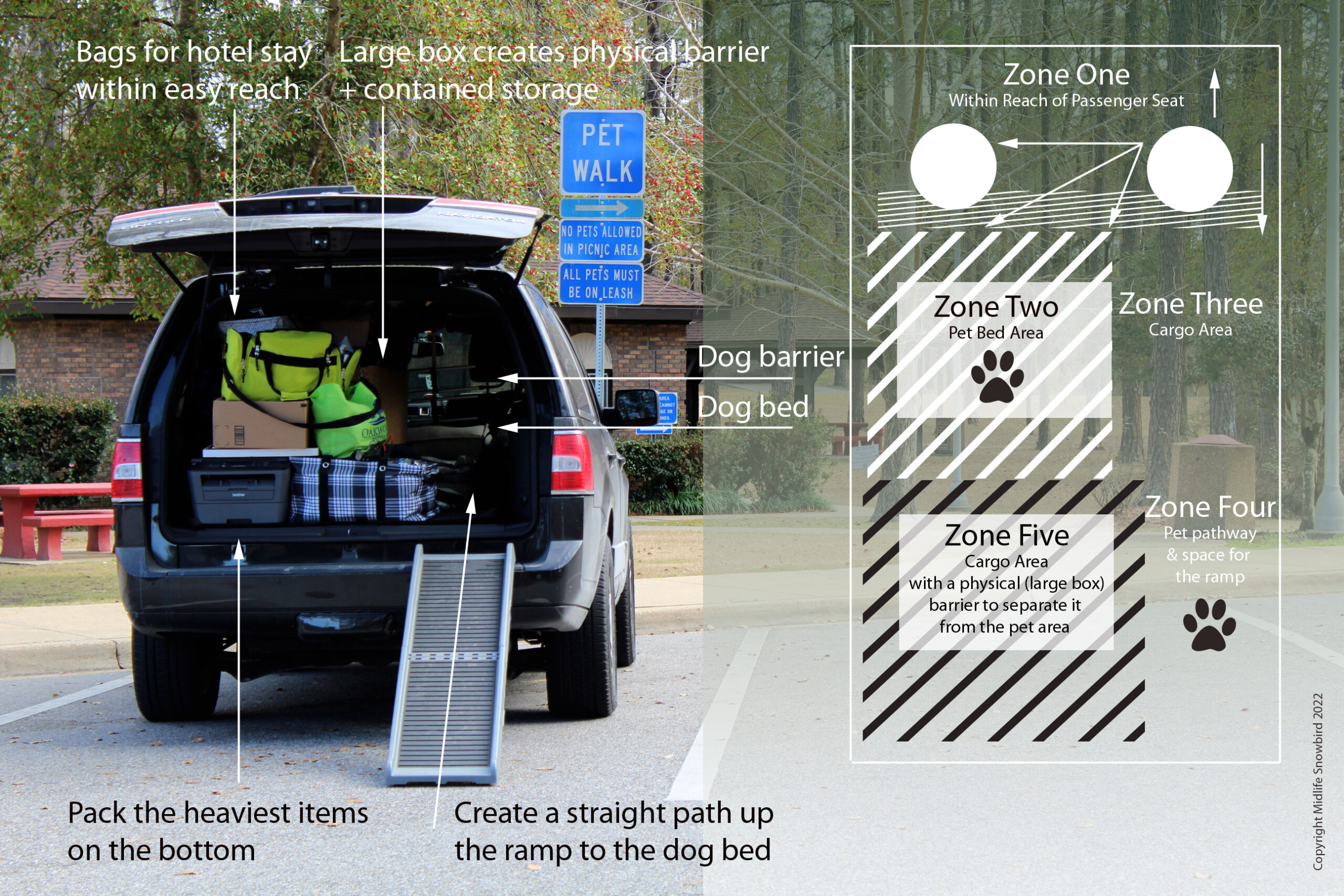
0_3991-Jan2021-MLS_diagram

How to Pack Your Vehicle

Strategic Organization for a Successful Snowbird Road Trip


The first season we became snowbirds, I made a huge mistake. I did not get involved in packing the vehicle, only the stuff that goes in the vehicle. I was naively happy my husband handled all of the rest. As you can guess, it didn't take long to realize I had no idea where anything was, nor was it organized so that essential items could be easily reached from the passenger seat in transit or while stopped. 

Over the years, I've developed strategies for packing the vehicle to/from our snowbird community or any other destination. Because most people, including us, typically don't make long haul road trips more than once or twice a year, I recommend reviewing your techniques of what worked and what to skip prior to departure. Yes, it's rather intuitive, but there's always some detail that gets overlooked and it's not typically convenient to correct it while in transit.

We transport our Golden Retriever and business essentials such as computers, supplies, equipment and a printer to our snowbird community. If you don't have a dog and/or a business to bring, it's much less complicated. These are my personal strategies for organizing our vehicle for a successful road trip.


Related Posts:

Countdown to Departure

Countdown to Departure, Pet Prep

What to Pack, What Not To


Strategic Organization for a Successful Road Trip

First Get Your Basics Organized/Updated

Most of us already keep the basics organized in our vehicles: proof of insurance, registration, vehicle manual, cash, garage door opener and compact umbrellas stowed in the pocket of every door. I always have an atlas in the seat pocket in case of no cell service while traveling through rural areas.

Emergency preparedness is essential for a long road trip. If you have all of the items for first aid or to change a tire or give/get a battery jump, verify it's all there. If you don't have any of those items, consider purchasing them or invest in a AAA membership if you're not the type to work on your own vehicle. Newer vehicles may not be designed for a jump due to the absence of battery terminals. If your vehicle is in that category, it's better to know in advance that you'll need professional roadside assistance than to try to flag down help only to find they can't help you and vice versa. Keep gloves, hats and an extra blanket or two in your vehicle in case of a problem.

If you travel via toll roads, your Riverlink, SunPass and E-Z electronic passes should already be installed on the windshield. If you prefer the cash/credit lanes, restock your small bills and change as a back-up just in case.

It's also assumed you will remember to bring your purse and/or wallet, sunglasses and keys. Everyone should have their own set of keys, don't try to downsize to one set in the event of lost or stolen keys.

Start With a Clean Vehicle

This should go without saying, but thoroughly vacuum and wipe down every inch of your vehicle's interior surfaces prior to departure. Road trips are stressful enough, it's important to start with an exceptionally clean interior for safety and launching your journey the correct way for no other reason than it just feels better. The exterior should be clean too, especially the windshield and all glass windows. By personally cleaning everything, you'll have an opportunity to check the condition and restock any of the aforementioned basics.

Organize by Zone

The most important zone, which I refer to as "zone one" is a radius within reach of the front seats. The primary job of the passenger is to assist the driver in every way possible while in transit. Second is to manage any additional passengers, including the family pet/s. Solo drivers will have a different set of needs that are not addressed in this post.

Many snowbirds travel by SUV, however, the zone strategy applies to any vehicle. Zone one is everything within reach of the front seats. The other zones include the back seats and cargo area. If your uncaged pet is travelling with you, remember that not only can you reach zone one, your pet likely can too. This means it's important to plan accordingly so your dog isn't chomping on snacks or discarded food wrappers that are within easy reach of you and him. The first year we traveled with our puppy, Bodie, he was delighted to discover rolls of toilet paper were located near his dog bed. He entertained himself biting them until our next pit stop.

Physical Barriers to Separate the Zones

We use physical barriers to separate the zones. This includes a commercially produced aluminum pet barrier that keeps our dog from entering the front seat area. For his safety and ours, this is non-negotiable. I've seen many dogs travel in pet cages, which is a good option for smaller animals. Even if your pet doesn't typically try to barge into the front, think of safety in the event of a fast stop on the highway. Your pet should not become a missle and neither should anything else in the cargo zones.

To contain the items in the cargo area of our SUV, they are packed within a large box with the heaviest items on the bottom and only lighter items on the top. Never put heavy items anywhere they can become harmful projectiles. The large box in our cargo area helps contain items that shift while in transit and might fall onto the dog. Yes, in the past it has happened with coat jackets that are stowed on top of the heavy items and it's frustrating because the passenger cannot safely move the item until the next pit stop.

Zone One Requires Multi-Functions

Zone one is very important because there are many functions happening in this zone. The passenger must be able to help the driver navigate as well as efficiently dispense food and beverages to the humans and pet/s. Other functions include storing and charging electronic equipment and adjusting the front and rear temperature and radio stations. Sleeping/resting are also important for the passenger. Zone one requires being able to quickly clean up spills and messes and dispose of trash.

Middle Console

The hard-working middle console is a plethora of activity. We keep our cell phone super charger and phones in the middle console area. The interior of the console stores bags of snacks plus cash/change and the vehicle manual. A bottle of hand sanitizer plus each person's beverages fit into the cup holders.

Always bring extra clean sandwich bags and varying sizes of extra plastic containers with lids to keep inside the console. These containers are very handy in transit. The driver can keep their own individual bag or plastic dish of trail mix, chips or popcorn on their lap during transit. Plastic containers are ideal to catch crumbs or drippy sandwiches. Leftovers, such as pizza slices or uneaten sandwiches travel better in a clean sealed plastic container vs. a flimsy styrofoam to-go container. There's nothing fun about cleaning up a capsized fast food box, especially because it never happens when it's convenient.

One of my best tips for travelling with a dog is to keep a decent-sized high quality (such as Rubbermaid® brand) air-tight plastic container on top of the middle console. Our dog prefers to munch on ice cubes in transit and when the ice melts, he has chilled water to enjoy. I layer two or three clean dish cloths under the container of ice to keep the condensation away from leather console top and to clean up drool or messes as needed. It works very well compared to the days of travelling with a traditional water bowl on the console. No matter what the ice/water is stored in, offer it to your pet frequently to ensure they don't get too dehydrated. They are stressed too.

Within your middle console, pet's travel bag or somewhere else within reach, make sure you know where the portions of kibble are located to feed the dog in transit or at a rest stop. I portion each meal in baggies so I don't have to measure from our bulk supply of dog food, which travels in a tin in the cargo area. There have been trips where I couldn't remember where the food was and resorted to getting it from the bin.

I stack the dog's travel bag on top of the bottled water (which sits on the floor behind the middle console, then my purse, travel pillow and cosmetic bag are on top of that. Whatever is most important to you should go where it can be easily reached.

Cosmetic bags should have practical items such as eye drops, lip balm, an extra contact case, spare glasses, a lens cloth, breath mints or mini bottles of mouthwash, tweezers, aspirin, make-up and purse-sized perfume. When spending that much time in your vehicle, you'll want to be able to refresh as needed between fuel stops.

Magazines and paperback books are stowed between the passenger seat and console within easy reach.

Dashboard console

As previously mentioned, the dashboard console should contain your proof of insurance, registration and plenty of extra paper napkins. The paper napkins are handy for messes that need to be thrown away at the next pit stop or in the event your drive-through order didn't include napkins.

Behind the Seats

I never travel without a throw-style blanket and beach towel or two and keep them and my travel pillow within easy reach for a nap or when it's a little chilly. We don't want our dog to overheat, especially if the sun is shining on his area of the vehicle, so it's easier to rely on a blanket and keep the overall temp colder rather than too warm. We also make sure the vents are not blowing directly on the dog too much. Keep an eye on things so the dog isn't miserable the entire time.

Our dog's pet bed is huge and it's situated behind the driver's seat since the driver won't be needing to reach back there anyway. We cover it with a clean sheet to not only keep it cooler than the fuzzy fabric of the actual bed, but the sheet can be washed upon arrival. By the time we've spent two full days travelling, it's hairy and has seen it's share of drool and other fluids.

Plenty of 12 oz bottled waters are stowed behind the middle console for the passenger to locate as needed. I also have at least one gallon of bottled water in the vehicle. My experience is the gallon of water is better for bringing into the hotel and the 12 oz bottles are easier to reach and dispense while in transit.

We keep our coats behind our respective seats so we can quickly find them for pit stops.

Floor Space

Slip-on shoes are essential. The passenger's floor space is usually not all that roomy and quickly fills up with shoes, bags of trash and often, my purse. I travel with two or three professional cameras and keep at least one within easy reach at all times. Sometimes that means on my lap, in my purse or in the pile behind the middle console.

The floor space between the two rear seats is filled with a solid box filled with canned goods and pantry items. If we had a small cooler that would fit in the space, that's what would be located here, but none fit the space. Not only does the box of canned goods give us something to eat when we arrive, it most importantly supports the dog's bed.

There's a lot to be utilized with floor space and the gaps from where the seats fold down. We usually bring multiple packs of double roll toilet paper to stuff in these gaps. Shoes and smaller items that aren't needed while in transit also fit in the gap.

A small set of weights is ideal for gaps or floor space and two liters and glass bottles wrapped in kitchen towels can travel on the floor or in the gaps if they won't be trampled in transit or roll out when the side doors are opened.

Pet Pathway Zone

Our dog is physically unable to jump into the vehicle even once, let alone multiple times per day on a road trip. We find it much safer for him and us to use a sturdy commercially made folding ramp. Because the ramp takes up space in the SUV cargo area, we often pack duffle and utility bags on top of it. That means unloading the bags every time the dog uses the ramp. It's a trade-off and not really a big deal. Other dogs travel in commercial pet carriers and cages with the cargo area. No matter how it works out best in each situation, be careful of air flow or lack thereof, as well as heating/cooling and access to food and water.

Practice and Refine with Your Own Vehicle

Before loading your sedan or SUV, carefully consider, "Do we really need this? Is it essential? A duplicate? Hard working?" If so, then it's worth planning and organizing how to make it fit within the allotted space of your vehicle. If not, leave it behind and direct your energy to the items of most importance.

Our first two seasons we travelled in a sedan, which is a lot different than the very large SUV that we purchased for the practical cargo space. No matter the mode of travel, think creatively and work out the strategies that are best for your own personal needs. Don't forget to observe other vehicles at the rest and fuel stops. It will either reassure you are on the right track or inspire you to try new tactics.

When we arrive at our snowbird destination, I enjoy watching the other travelers loading their belongings on the utility carts to move in for the season. I've never seen anyone with a light load and it's refreshing to know we're not that different from anyone else.



" 'Just in case' is the curse of packing.”

-- Alexandra Potter, British Author


DISCLAIMER

The information contained in this website is for general information purposes only. We make no representations or warranties of any kind, express or implied, about the completeness, accuracy, reliability, suitability or availability with respect to the website or the information, products, services, or related graphics contained on the website for any purpose. Any reliance you place on such information is therefore strictly at your own risk.

In no event will we be liable for any loss or damage including without limitation, indirect or consequential loss or damage, or any loss or damage whatsoever arising from or in connection with, the use of this website.

Through this website you are able to link to other websites which are not under the control of Midlife Snowbird. We have no control over the nature, content and availability of those sites. The inclusion of any links or advertisements does not necessarily imply a recommendation or endorse the views expressed within them.

Snowbird Travel Precautions During A Pandemic

Prior to unloading anything, take extra precautions to sanitize the air and surfaces of your hotel room while in transit to your destination Snowbird Travel Precautions During A Pandemic Guidelines to Consider Prior to Your Road Trip Many snowbirds depart for their southern homes after 

Snowbird Packing and Prep Four Week Timeline

Plan your travel bags so each person knows exactly how much space they are allotted for clothing, kitchen, bath, office and pet/s. Snowbird Packing and Prep Four Week Timeline Snowbird Checklists for Leaving Home Snowbirds have a dual goal prior to departure: not only packing, 

Countdown to Departure

COUNTDOWN TO DEPARTURE

14 Point Checklist prior to heading South

On the way home our third season, we decided to change our transportation to a full sized SUV for maximum cargo space and easier accessibility for our large dog

________________________________________________________________________________________________

Many snowbirds retreat to their warm climate homes in October and November, which means now is the time to get prepared for the countdown to departure.

1. Project lists

If there's unfinished business at home, figure out your projected timeline to complete them, bring the projects with you or delay them until you return. By being proactive, you'll be less stressed out later. Yard/landscaping, home

Don't forget to update your pet tags

repairs, maintenance, roofing, decluttering, correspondence, files, bills, banking, improvements, hobbies, and more to name a few.

2. Your Home Team

Contact your trusted friends, family and neighbors to help you while you're away. Who will be handling your mail? Houseplants? Packages/deliveries? Snow plowing? House sitting? Unexpected problems? Work ahead and let your team know when and how they will be needed. Just because they helped you in the past doesn't guarantee they'll be available or willing to help again. Set up a plan A, B and C if you can. Of course, the more you can do yourself, the better. Set aside a budget to pay for the necessary help unless you have someone to trade duties with. If it's someone who insists they won't take money, send them a gift card. It's important to make them feel appreciated. No one wants to feel used or taken for granted. Don't forget to

give them access instructions for your home, including security codes.

3. Order Supplies

Don't forget to update your pet tags and medications such as heartworm/flea/tick preventatives. If you have "snowbird" business cards, update and reorder if needed. If you use checks, restock your supply. Same for your prescriptions and anything else that may be important.

4. Appointments

Do you have doctor's appointments, vet appointments and other unfinished business such as meetings with your tax and financial advisors? Get them scheduled and done at least a month or several weeks in advance of your departure. Don't forget to schedule one last hair appointment before you depart. If possible, schedule upcoming appointments for the first part of your snowbird season and get those out of the way.

5. Organize

Merge, purge and weed out your stuff. Donate to charity or have a garage sale. It will feel better to lighten the load in advance so you don't have to think about it while you're away and it won't be staring you in the face when you return home in the spring. I'm not one who is a natural organizer, but being organized is fundamental for any snowbird. My favorite organizational tool? Plastic storage bins in all shapes/sizes. Photo albums, family keepsakes, toiletries, linens and seasonal items all reside in storage bins. Don't forget to label them. Also, purge, back up and organize your passwords, computer and electronic files as well.

6. Security

Now is the time to check your existing security systems and consider increasing your security. If you already have a security monitoring system, consider upgrading it before you depart, such as adding more glass break sensors. Other security measures include more interior and exterior cameras and installing deadbolts to any exterior door that doesn't already have one. Motion sensor lights are another good option. If you haven't already installed a keyless entry to the garage, do so now. If it's available through your third party security vendor, add an alarm to your sump pump for peace of mind.

7. Pay Outstanding Balances

If you rent your snowbird home, outstanding balances will typically need paid anywhere from 60 to 90 days in advance. Review your contract for any other details that may be pertinent. The goal is no surprises. Be sure to stage the folder containing your rental agreement and proof of payment along with your other important documents that need to move south with you.

8. Book Your Hotel

Reserve your hotel for the trip both down and back well in advance.

Make social plans for the time leading up to your departure

Because we travel with our Golden Retriever, we book our favorite hotel for the half way point to our snowbird destination. They have a limited number of dog accessible rooms and we don't want to miss out. Not only does the staff remember us, the rooms have mini refrigerators and microwaves and the hotel has a fantastic breakfast buffet. Plus they charge a very reasonable fee for the dog. Not every place welcomes pets and for both us and our dog, knowing what to expect makes the trip slightly less stressful.

9. Finalize Social Plans

Check your calendar and make your social plans with friends and loved ones to avoid a last minute scramble. Our first season, we hosted a farewell lunch for family several days before we left. It was the last time we would see them for awhile and it turns out it was the last time they ever saw our beloved Golden Retriever, Reilly, who sadly passed away while we were in our southern home. By making plans before leaving, you and they will tend to cope better when away for an extended time. This year we made plans to meet up with our snowbird friends on Labor Day weekend -- before everyone heads back to their winter homes again.

10. Prep Your Vehicle/s

Thoroughly go over your vehicle and determine what maintenance needs done. Change the oil, purchase new tires if they are less than 50% and get a general check up. Don't forget about winterizing vehicle/s being left behind. Take photos of your odomoter readings and put the keys to your vehicle/s in a safe place where only you know where they are. Don't provide temptation for theft or anyone else. Be prepared for possible deflated tires and dead batteries upon your return.

On the way home from our third season, we decided it was time to switch from a sedan to a full-sized SUV for increased cargo space and to help our furry passenger, Bodie, more easily enter/exit. Bodie wouldn't climb into the sedan without an assistive boost each and every time we made a stop, so his needs were an important consideration. Eight months ahead of our departure for season four we brought home our "beast." This gave us enough time to evaluate and purchase additional accessories including a pet barrier as well as a new ramp for rear entry so our dog can easily enter/exit.

11. Prep Your Supplies

I pack reduced quantities of herbs, seasonings and spices; wooden spoons, spatulas, mini server spatulas and flippers, serrated knives and just about anything else that can fit into one shoe-box sized plastic storage bin. If you have favorite custom spice rubs and blends, pre-make an appropriate quantity before leaving home so you aren't hauling 14 ingredients only to use a small amount of each. Canning jars are excellent for transporting smaller amounts of liquids if you can avoid breaking them during transport.

12. Notifications

Prepare a contact sheet for your closest friends and loved ones with your address, dates of travel and any pertinent details. Distribute it well in advance of departure so you don't have to worry about it at the last minute. Notify all other appropriate businesses and entities, such as your newspaper and change of address for your mail. Don't forget any other delivery services who may need to be put on a seasonal hold. If you can temporarily stop your cable tv service, it could save some money.

13. Shipping

Get your packages ready several weeks ahead of your departure and avoid the last minute crunch that inevitably happens as departure approaches. Because we are self-employed, we have computers, a printer and products, including parts/accessories that are shipped in advance. Getting the timing right is an art form, but is much smoother when you are prepared.

14. Close Your Home

Last, but not least, clean and prep your home for a season away. If your home will be unoccupied, turn off the exterior water line. Adjust the blinds and thermostat, set up your lighting self-timers, turn on the security alarm and trust that your systems and pre-planning will pay off for another successful season away.

"When you grow up by the sea, you spend a good deal of time looking at the horizon. You wonder what on Earth the waves might bring -- and where the sea might deposit you -- until one day you know you have lived between two places -- the scene of arrival and the point of departure."

--Andrew O'Hagan