BE THE SNOWBIRD WHO IS WELCOME BACK How to Be Irresistible to Your Hosts Snowbirds who rent their winter residences are plentiful and there is typically not a shortage of guests who want to stay in a great property, which means it is important to …
Map of The Emerald Coast, Southern Alabama and Northwest Florida LOCATION, LOCATION, LOCATION Peak vs. Off Peak Affects the Cost of Housing As snowbirds return home to begin the off-season, much reflection goes into what can be done differently for the next season. Life changes …
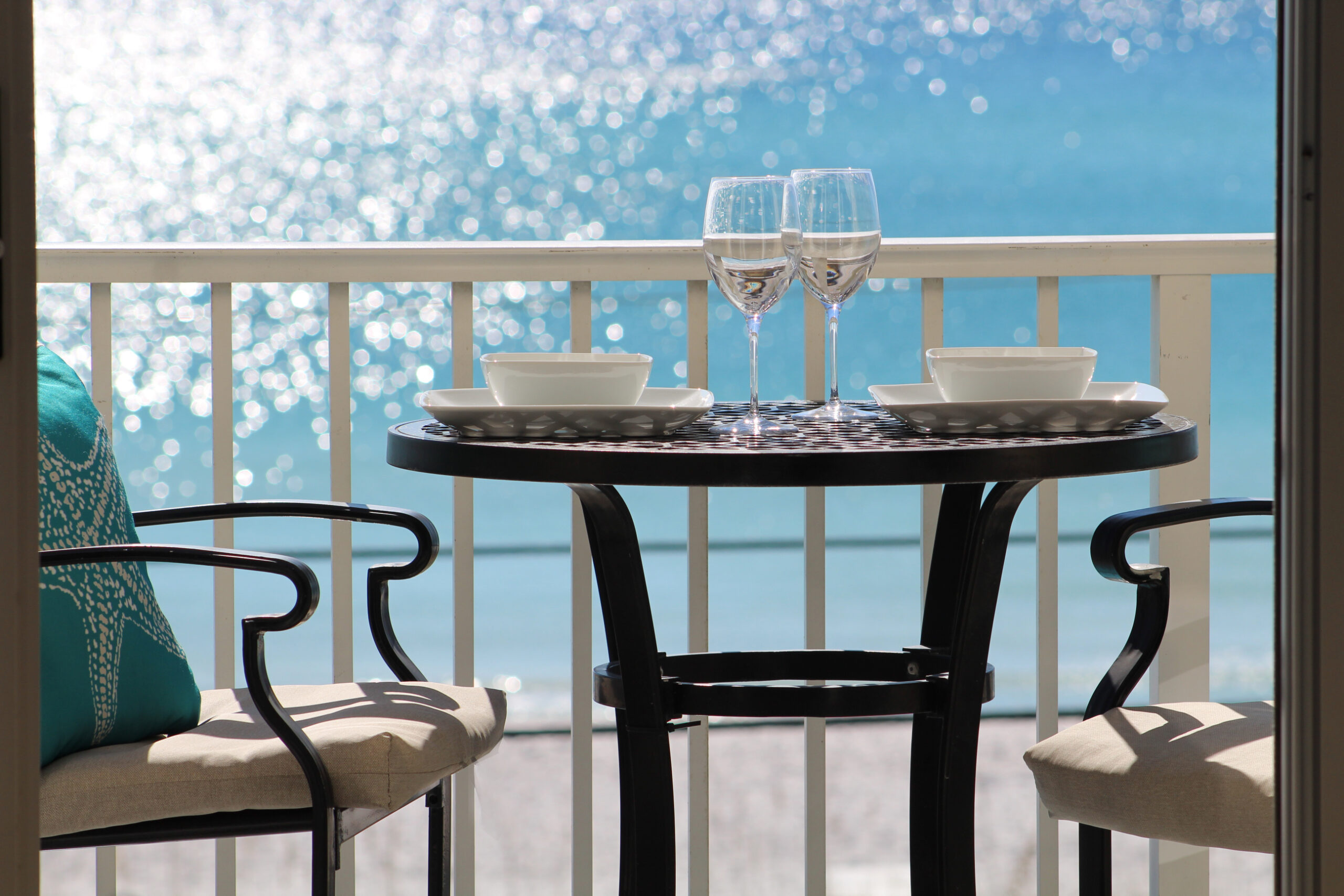
Perceived and actual views may be entirely different, as well as accessories used for staging. Don't hesitate to ask for clarification.
How to Evaluate Online Rental Photos
Travel and snowbirds are synonymous. Snowbirds by definition seasonally migrate to a warm climate and for many that means selecting a place to stay with very basic information such as online photos, reviews and a description of the property. From personal experience, before ever selecting our snowbird community in Northwest Florida, I looked at hundreds of properties online via specialized travel sites. The photos that got my attention were taken by professionals, had great lighting and flattering angles.
I consider myself to be rather astute evaluating a property from afar, whether hotel or other type of rental; however, every once in awhile there are blunders. My sister and I spent time in Saugatuck Michigan and selected a specific, beautifully decorated ground floor suite of an expensive boutique hotel based on photos, reviews and web site. Prior to arrival we envisioned ourselves walking from the porch of our suite across the expanse of lawn and reading books while seated next to the lovely lake. Wrong. Upon checking in, we discovered the enclosed porch does not have an exterior door, a road separates the lake from the hotel and the expanse of lawn is actually not part of the hotel's property. Worse, a new residence was under construction directly across the street from our hotel. Not only was it noisy, the new home completely blocked 50% of our view of the lake. We loved the hotel and had a great weekend regardless, but finding out about a blocked view from online photos that had not been updated was not fun.
I've compiled 11 categories below to assist with selecting a rental, whether during snowbird season or the off season. As always, careful research can result in the best success.
1. COMPARE PHOTOS WITH AN ACTUAL MAP
Once you've narrowed down your top options, look at an online map and compare the distance of the property address with the online photos. Look at both 360 degree street view and the overhead bird's view. Is it physically impossible to see a great view from inside the unit, such as the water or mountains? Many times a rental listing will show supporting photos that are not actually views from the rental unit itself, but are from around the resort property or neighborhood. Just about every listing for a rental near a beach will show an image of the beach, yet the view shown in the photo isn't necessarily what you will actually see from your kitchen, living room or balcony. Same for mountains, rolling hills or even the community pool.
2. COMPARE LISTING PHOTOS WITH GUESTS PHOTOS
Of course every rental owner wants to show their listing in the most flattering manner, which usually includes professional photos that have been lightly retouched for brightness and color. Now compare those photos with actual photos guests have posted online, if available. If the decor and images tell the same story, it's a good sign. Remember, guest photos may not reflect the most current version of the property and the reverse may also be the case: the rental photos may not be current. Guest photos are likely taken with clutter in them or poor angles and/or lighting, which is to be expected. Guests typically want to share their enthusiasm for a place, but don't forget motive. If a guest is unhappy, they may unfairly post photos and reviews that show the worst or exaggerated attributes of a property.
3. COMPARE LISTING PHOTOS WITH REVIEWS
Online reviews, when available, can reveal details that may not be obvious from the photos. Typically this might include clarification that a view is partially obstructed, that the water is much further away than it appears, that the unit's space is much smaller than it looks or that there is a road in-between the property and the beach. Most owners do not intentionally mislead their guests or do not realize that guests who have never been to the area don't have the personal experience of having seen the neighborhood in person. If there is a valid suggestion that can privately be sent to the owner to improve their listing, that is always appreciated. As mentioned before, remember the motive for reviews. If a review seems unfair or one-sided it may be because of an unhappy guest who does not have the best intentions.
4. BE REALISTIC ABOUT DRONE PHOTOS
Drone photos showing the bird's eye view are great for getting an overview of an area, particularly in relationship to a particular feature, such as a body of water. Be realistic of where the property you are considering actually is and what obstacles will be in the way of your rental compared to the feature shown in the photo. You are not going to be in a drone looking at the view, so don't confuse the purpose of the drone photos.
I know first-hand of guests who rented a private home with fenced private pool directly facing the gulf and beach with just a road in-between. What isn't obvious is that because of the fence, to get from the home's pool to the beach, it's necessary to walk a block West down the street to exit the housing addition, walk over and cross the main road and then walk back East another block to get to the neighborhood's beach access point. Because of the fence, it isn't as quick or simple as merely walking across the street.
5. STRETCHED PHOTOS
Many times photos are stretched on purpose or inadvertently which causes the space to look much larger than it is. Be aware of stretched photos that may have unnatural proportions of the items that you can see are wider than taller, such as appliances. Misconceptions about the size of a space are likely to cause the most distress upon actually renting a place only to find it's smaller than they realized.
6. WATCH THE ANGLES
Photo angles are a legitimate method of showing the expanse of a space, but recognize that angles also can make an object appear much larger than it actually is. This is especially apparent with angles used to show features such as a yard, swimming pool or interior rooms of a home or condo. Low angles or cameras mounted on the ceiling looking downwards can make a room or feature seem much larger than it is. When you are actually in a space, you will not have the same "fly on the wall" or "worm's" view which means the space will not look as large as it does in the photos.
7. ACCURATE DESCRIPTIONS
It's frustrating to see listings promoting rentals that don't accurately portray the property. As an example, I commonly see photos of "gulf view" properties that actually have a side view of the water from way back in a condo complex. An unsuspecting guest may not realize the view from the interior of the unit is going to be of the homes adjacent to the unit, not the water. The only way to see the gulf is by stepping onto the balcony and looking into the distance. Technically, it is a gulf view, but there is a huge difference in what that gulf view is compared to a unit where you can directly see the gulf from the interior rooms and the balcony. Ground floor units that promote themselves as "gulf view," present a different challenge. Be aware of what that gulf view might actually be. For anyone not familiar with ground floor units, your actual view may be a sliver of the gulf due to natural topography where the ground floor unit is lower than the dunes next to the gulf and it results in limited views. If you aren't sure of what view you are getting, ask for photos that are not "zoomed in."
8. LOOK FOR VISUAL CUES
Visual cues provide a wealth of information. Look for hints in the listing photos that show the balcony railing in the foreground and other details such as the pool, road and beach in the background. High rise photos typically show great views looking across the water and/or other natural features. However, the view looking down from say, the 11th floor, may be terrifying for you, your pet or guests. I have friends who stayed on upper floors of high rises just one time. It was too much and they returned to the same complex only in a lower location. Visual cues can indicate the distance from your potential rental unit to get to the nearest parking lot, pool, attraction such as golf course or body of water. There are many great rentals in buildings that are second or third row to the beach, just make sure you are aware of it from studying the photos.
9. ACCURATE STAGING
I've seen plenty of online photos of beautifully staged rentals with props that are not likely included in the rental. This may be items such as dishware or glassware, food, beverages, napkins, accessories, beach equipment and much more. If a staged photo shows these excluded items, it should specifically say on the photo "Food and beverages are not included" to make the potential guest realize the photo is for illustrative purposes. I have also seen rental photos with items such as laundry soap, beach towels or high end barware and the description does clarify that the soap, barware and beach towels are indeed part of the rental. To be sure, read the fine print or ask the owner or property manager.
10. OMMITTED PHOTOS
As is commonly known in psychology, don't be distracted by dazzling photos, pay attention to what is not being said or shown. Prime photos, also known as "Hero" shots might show an amazing view looking in one specific direction. However, what is to the left or the right that is not shown in the photo? Telephone poles? A privacy fence, dumpsters or other obstruction?
Does the rental have a dishwasher or washer and dryer? Photos of appliances such as an in-unit washer and dryer may or may not be shown online for various reasons, so you should clarify what is available. If in-unit washers are lacking and there's no visual cue from a listing photo, it can easily be missed prior to arriving and realizing coin-op laundry facilities are located in a common area. Similarly, distance to parking, dumpsters, elevators, stairways and much more may not be photographed. Always ask for clarification.
Don't assume every room has a nice or any view. The bedroom window in our condo looks at a covered walkway and swaying palm trees. The bedroom of the unit directly next door looks at a covered walkway and a dark stairwell. I cannot say it enough, "Pay attention to what is not being said or shown." It's ok to ask for photos showing each view or all perspectives of the rental so there's no surprises.
11. CURRENT PHOTOS
It is expensive to hire a professional photographer, but current photos that accurately portray a property are invaluable for potential guests as well as owners. Professional photos are designed to dazzle you, however, don't overlook the gems that may be bypassed due to poor quality photos. Over time, furniture, appliances, rugs, lighting and decorations change. If you aren't sure of how recent the photos are, don't hesitate to ask.
Overall, take your time to carefully study the promotional photos, reviews and then make an informed decision. If necessary, try out different places until you find the one you want to return to over and over again.
"Photography is the only language that can be understood anywhere in the world.”
-- Bruno Barbey, French Photographer
DISCLAIMER
The information contained in this website is for general information purposes only. We make no representations or warranties of any kind, express or implied, about the completeness, accuracy, reliability, suitability or availability with respect to the website or the information, products, services, or related graphics contained on the website for any purpose. Any reliance you place on such information is therefore strictly at your own risk.
In no event will we be liable for any loss or damage including without limitation, indirect or consequential loss or damage, or any loss or damage whatsoever arising from or in connection with, the use of this website.
Through this website you are able to link to other websites which are not under the control of Midlife Snowbird. We have no control over the nature, content and availability of those sites. The inclusion of any links or advertisements does not necessarily imply a recommendation or endorse the views expressed within them.
Room by Room: How to Furnish a Vacation Rental Property Room by Room: How to Furnish a Vacation Rental Property is a follow-up to “The Basics of How to Furnish a Vacation Rental Property.” As an experienced vacation rental guest, I learned from observing and …
The Basics of How to Furnish a Vacation Rental Property Many snowbirds understandably dream of eventually purchasing their own vacation rental property. My husband and I rented for six seasons and it inspired me to write a post entitled, “What to Look for in a …
One consideration of buying a second home is whether to retain or down size one's Northern home [Covington Lake, Northeast Indiana]
Pros and Cons of Owning Two Homes
15 Point Checklist Before Buying a Second Property
Many snowbirds think about owning a vacation home or investment property in their warm weather climate. There's a lot of appeal and advantages to have your own place and in time, it may appreciate in value, depending in part on the type of property and location.
However, for every pro, there's a downside to owning two homes. My husband and I have more than 14 years' experience with two homes, including a condo in our Northern community that I manage as a long-term rental. Long or short term rentals is an extensive topic that will be covered in a future post.
Let's focus on the major considerations of buying a second property in a warm climate where you want to split your time. We will assume you finance the property without partners or some sort of timeshare or fractional investment arrangement. Even without managing partners or renters, it's a lot to take on, not only financially, but the logistics of living in two places. Don't discount the impact of feeling the pressure of friends and family who express their needs and wishes regarding either of your homes. Below is a 15 point checklist of the major considerations based on my own personal experience as well as future ambitions.
Checklist of 15 Considerations Before buying a Second Home
Before you even get to the "fun" part of deciding what type of home you want, how it will look and be furnished and where it will ideally be located, there's much to think about -- the practical nuts and bolts of what it really means to own a second home and how you plan to address the issues that will invariably crop up. Not to mention how much it costs and where the money will come from to pay the bills.
Don't impulse buy. Find out the stats including cost of living, crime rate and weather patterns. Know the area you are considering as it relates to daily life as well as the impact of high season vs. low season. Will traffic be a nightmare during high season? Consider how you will get there and how much it will cost. Can you and your guests arrive easily by air if needed? Will your new property meet your needs in two, five or ten+ years? Are there local restrictions that will affect you? We have Northern neighbors who fly to Hawaii for an extended winter stay. While there, they have experienced much higher prices for airfare, housing and food; delays and inconveniences due to weather, such as volcanoes; as well as travel restrictions due to the Covid pandemic. Ultimately they bought a second home in south Florida because it was too expensive and too distant to invest in an island property.
How important is size or type of property? Park models and mobile homes are very popular options because they are available at many price points for almost any budget. The big question then becomes, can you and your spouse get along when living in very close quarters? This type of living arrangement works better when there's outdoor space and activities to spread out a bit.
Some snowbirds sell their Northern home and buy something smaller so they can also buy a second home in a warmer climate. Before doing so, make sure each place is a win-win. If you end up with two condos in two climates and neither has a private fenced yard for your dog or space for a vegetable garden, it could ultimately be quite deflating.
It's really not that unusual for spouses to spend time at either home without their partner. I know of couples who spend a few weeks or months together in their warm weather home and then for various reasons, one might be in the southern home and the other has to travel back North, whether for work, family or other commitments and occasions. If that is your situation, can you work out the logistics as well as the physical separation of being apart?
Are you fully prepared for family or friends who ask to stay short or long term at either of your properties while you are not there? This is a serious issue that is also not that unusual. Talk it over with your partner to be prepared in advance for whatever answer you will need to give. Come to a mutual agreement, then be firm with your decision. During the frenzy of a crisis, you don't need the added burden of getting into a heated argument with your spouse because you didn't have a plan in advance. There's nothing worse than feeling you can't come back to your own place because someone down-on-their-luck is living in your home and maybe even driving your vehicle/s. Remember, having a second home that you've diligently worked to attain will automatically invite envy, criticism and/or multiple requests for favors.
It's one thing for immediate family to request favors regarding staying in your second home, but imagine if friends, neighbors and friends of friends start asking to stay in your property? Set the parameters before you buy so that you have solid, consistent answers when the time is necessary. I know of a woman with a second home on a lake whose adult children stay in it fairly frequently and are known to eat up the pantry items, deplete the toilet paper supply, leave loads of dirty linens and towels and piles of dishes in the sink. That's bad enough, imagine how you would feel if a stranger did it? It may not be worth the agony, even if you charge a daily rate to cover costs.
Last, but not least, whether you are a domestic or international home buyer, there are many legal, tax, insurance and financial pros and cons to owning two homes. Check with your professional advisors before making any commitments. Do your homework in advance so you are fully aware of the impact of having a second home.
1. Who will stay at the second property?
--You and/or your spouse?
--Your pet/s?
--Family? If so, immediate family or extended family?
--Friends?
--Friends of friends?
2. Who will stay at your primary property?
--You and/or your spouse?
--Your pet/s?
--Family? If so, immediate family or extended family?
--Friends?
--Friends of friends?
3. How long will you each stay at each property?
--Split the time in half?
--Go back and forth every few weeks or months?
--If you are an international buyer, can you meet the residency requirements for both countries?
4. How will you and your pet/s get to/from your second home?
--Air?
--RV?
--Vehicle?
5. Where will the second property be located?
--City/metro
--Desert
--Golf community
--Island
--Mountains
--Rural
--Senior community
--Waterfront: ocean, river or lake?
--Access to an airport?
6. What type of property are you considering?
--Condo/townhouse/villa
--Manufactured home
--Park model or mobile home
--Single family residence
7. What kind of amenities do you want?
--Balcony, deck or patio?
--Clubhouse?
--Dog park or fenced area?
--Entertainment?
--Fitness equipment/gym?
--Parking: public, private, covered or garage?
--Pet friendly?
--Pool: community or private pool?
--Sports activities onsite such as golf? Tennis? Racquetball? Volleyball? Shuffleboard? Miniature golf?
--Storage?
--View?
--Yard: public space, private or fenced?
8. What is your budget for your second home? How much can you spend on:
--Down payment (10% to 20%), closing costs
--Mortgage
--Insurance
--Homeowner's Association (HOA) fees
--Duplicates of everything, including furniture, appliances, clothes, sports equipment
--Amenities
--Cable television and wifi
--Lot rent
--Maintenance
--Security
--Supplies
--Taxes
--Utilities
--Vehicle/s
9. How will you maintain two properties?
--Through a condo or community HOA?
--Private arrangements?
10. What kind of transportation will you permanently keep at your second home?
--Bikes?
--Golf cart?
--Motorcycle/s?
--None?
--Vehicle/s?
11. How will you solve unexpected problems in either home?
--Do you have a solid team of neighbors, friends or family in either place?
--Can you solve mechanical and other problems from afar?
--Are you willing to find and hire long distance help as needed?
--Can you provide access to your property through a key code or other means?
--Is your insurance coverage adequate?
12. How often will you welcome guests at either property?
--Anytime?
--Invitation only?
--On a limited basis?
--Upon request?
13. How will you handle your guests?
--How long will guests be welcome to stay?
--Are guests expected to contribute financially?
--Do you have a budget to entertain your guests?
--Will you provide beverages, food and meals for your guests?
--Do guests need to provide their own transportation?
--How will you handle guests who ask to stay in your property during your absence?
--What is your plan if a guest behaves badly?
14. How will you handle the stress of two properties?
--Are you ok with the commitment of returning to the same place each year?
--Are you well funded?
--Do you have plans and back-up plans for problems that arise?
--Do you mind cleaning, stocking and maintaining two properties?
--Are you and your partner in agreement on how you will handle major issues?
--Can you travel back and forth on short notice if needed?
--Can you realistically manage one property from afar at any given time?
--Will your pet adapt to two homes?
--What will be the remedy for damage caused by you or your pet/s? Natural disasters? Damage from guests and their pet/s?
--How will your loved ones be impacted when you are away?
--Can you accept the risk your property may decrease in value?
15. At what point will you opt-out and sell either property?
--When you retire?
--When you reach an age where you can no longer travel back and forth?
--When it becomes too stressful or expensive to manage two properties?
--When your loved one/s are no longer living nearby?
--When one of the properties significantly appreciates in value?
--When your spouse or partner expires?
--Do you plan to infinitely retain two properties?
--Have you implemented an estate plan?
"You will never be completely at home again, because part of your heart will always be elsewhere. That is the price you pay for the richness of loving and knowing people in more than one place.”
Leeward Key in the Destin area features stunning views of sugary white sandy beach of the Emerald Coast Cost of Snowbird Rentals: Beach, Desert, City/Metro Comparison of rental rates for houses, casitas and condos in three different areas Many snowbirds rent housing in a warm …
Before becoming an RV snowbird, there’s many considerations including expenses and type of recreational vehicle [Miramar Beach, Florida] RV Snowbirds 21 Considerations Before You Buy a Recreational Vehicle Travel in recreational vehicles, known as “RV’s,” has always been a big thing, but with the 2020 …
Snowbirds deal with a range of coping challenges no matter where they are. [ Seaside, Florida, South Walton County]
Where Do I Belong?
Recently I was asked by a reader about coping with the challenges of living in and between two homes and communities. Specifically, regarding the bittersweet emotional process of physically letting go of one set of friends/family, residence and community to move into an entirely different place. And once there, to feel fully engaged and a sense of belonging without longing for one's other "home." To those who have not experienced life as a seasoned snowbird, it may come as a huge surprise that it isn't as easy as simply packing your bags to travel back and forth from one residence to another without a second thought. It's a series of mixed emotions that can make or break your happiness as a snowbird and make yourself ponder, "Where do I belong?"
Winter Visitors vs. Winter Residents
There's a common misconception that snowbirds are just "visitors." A common alternate term for "snowbird" is "Winter visitor." In my opinion, these terms are completely inaccurate.
Is there anyone who still feels like a "visitor" after spending more than a short time in your warm weather residence? I doubt it. Snowbirds usually consider themselves fully invested in their southern communities on many levels, so a better term is "Winter resident" or "Winter Texan, Floridian, Arizonan," etc.
House vs. Home
There's also a common misuse of the term "house" vs. "home." A "house" is a building or structure used for human habitat. A "home" is a place of emotional connection where one feels comfortable, safe and a sense of belonging.
Before anyone starts judging about "first world problems," let's cut to the point. There's a lot at stake financially, physically, emotionally. Many modern snowbirds are middle class and have worked, sacrificed and saved their entire lives to achieve this goal -- it isn't a lifestyle exclusively for the wealthy. Nor is it a lifestyle that anyone takes for granted. It's a conscious choice to be a snowbird.
It's not all that uncommon in today's society to live in two homes. Children of divorced parents need to feel "comfortable, safe and a sense of belonging" in each home, as do adults.
It makes no difference if you own or rent your home -- just ask a child. They don't own their home, but they sure know if they feel they are "home." The emotions of one's "home" are the same for everyone, regardless of age, marital status, geographical location, ownership or the size of one's bank account. If you have a lot or a little, recognizing and acknowledging the psychological issues of living in two homes can provide a huge advantage to feeling well adjusted vs. floundering.
Two Homes, Deep Emotions
Snowbirds typically live in two modest homes or one modest home and one rental home, park model, condo or some combination of all of these, anywhere from a few weeks to half of the year or more. Most of the time, all is well and although there is some psychological adjustment, surface feelings are kept in check.
However, many snowbirds don't openly share the deep emotions of living in two communities. To an outsider, it may seem like a carefree life, yet there is a wide range of emotions of living in two homes that fall into several categories. At times it might seem that this is part of some sort of midlife crisis. Based on years of experience, I've identified common psychological issues of living in two homes, personal accounts and coping strategies to bring more balance based on my own experience, as well as others. By confronting one's emotions, it can be therapeutic. As they say, "What you recognize, you energize."
Transitioning Between Homes
Issues:
--Coping with the emotional struggle of anticipating and letting go when transitioning to/from one home to the other
--Feeling unsure of where "home" actually is, for example, if someone spends half of their time in the south, but feels the north is one's "real home"
Personal Account:
There are snowbirds with a more complicated situation than others. For example, the reader who inspired my post shared that she works part time in her southern community, which is where she and her husband live most of the year. Their son also lived in the south, but moved back north two years later and it’s very hard for her being away from him. She lives in her northern home for two warm months of the year and at Christmas. Her mother visits for two weeks in February. Her husband has absolutely no problem with the transition of having two places, but despite having great friends, she struggles with, "Where do I belong?"
Strategies:
Know your triggers. Recognize that there are many emotions interacting and it could be a mix of many different issues.
Ask yourself: "If I were at my other home right now, would I be missing my present home?" And then answer why or why not. It will likely be a good reality check. You may be forgetting many of the qualities that long ago attracted you to your choices of homes.
Apply the same principles that divorced parents of children living in two homes instill in their kids: acknowledge that the range of emotions you're feeling are normal and not bad. Tell yourself it’s OK to go to the other place, have fun while there and enjoy being at each home. Remind yourself of the different benefits to each place and that although each home is entirely different, everything will probably be OK. You're not going to do things the same way in each home and that’s fine too.
Reevaluate and examine if any changes need to be made? If you're stuck in a rut, it may be time to take steps in a new direction.
Plan a list of goals, projects and objectives for your time in each place. As an example, "While in my southern home, I want to: explore new geographical areas, try new activities and learn a new skill." And "While in my northern home, I want to reconnect with loved ones, take a community class and make some home repairs and upgrades."
Fear of Missing Out
Issues:
--Feeling disconnected, isolated, left out, empty or unsettled, regardless of having friends in both places
--Missing family and loved ones and/or fears of abandonment
Thoughtful gestures such as a flower bouquet help bridge the distance
Personal Account:
We have a senior family member who truly wants to spend time with us in our southern home. To date, primarily due to mobility issues, she has been unable to travel that far. Of course, she is greatly disappointed to be left behind and miss out on time in a warm climate. She worries about who will help her at home with mundane tasks or anything major that might happen. Of course we feel the pressure and guilt of leaving not just her, but everyone else, even though we are away for weeks, not months at a time.
We have snowbird friends who stay months at a time. By the time we join them for the last portion of the season, at times we know we've already missed a lot.
Strategies:
Admit, you and they will miss big and small happenings and things will not be the same, but life will go on. Acceptance is the first stage of coping.
Remind yourself and those left behind that no place is perfect and the perceptions vs. reality don't always match. As an example, even if our loved one was able to visit us, there would be a whole new set of problems, such as our vehicle that she is physically unable to climb into, plus a lack of furniture that would accommodate her mobility issues.
Help your loved ones understand that as much as you might want to, you can't just pick up and return back and forth between your homes for a host of reasons. But you will do your best to communicate regularly and help solve their problems from afar.
Make small changes to stay in contact. If you don't already use video conferencing such as Facetime, Zoom or Skype, learn how to do it and then make regular contact with loved ones.
Try sharing your emotions with your spouse, closest friends and loved ones if you haven't already. Let them know you are having feelings of abandonment, fears of missing out, feeling stuck/trapped and so forth. Chances are, they feel the same way about your absence and may need to express their feelings as well. Communication is key.
Keep up with your regular online social presence. If you typically stay in contact via social media such as Facebook or Instagram, make sure you are checking in regularly to feel connected.
Send care packages. A bouquet of flowers or thoughtful small box of cookies or treats with a letter or note at regular intervals can help you and your loved ones bridge the distance.
Feeling Down
Issues:
--Feelings of depression or being in a funk despite living in a warm weather climate. In other words thinking, "I shouldn't feel this way."
Personal Account:
I have a friend whose husband is not yet retired so she is a solo snowbird four months of the year. Her first season she was so excited to experience beach life she kept very busy. There were many, many groups of friends she hosted who came to visit and she spent time traveling around the region exploring exciting new cities, such as New Orleans. The following year, the newness wore off and she realized she was feeling depressed and didn't leave her condo for days at a time, despite being in her beloved
Periods of bleak winter days affect snowbirds at home or away [Holiday Isle, Florida]new southern home. By the third season, my friend acknowledged she is ready to significantly reduce time in her southern home to pursue new international travel adventures.
Strategies:
Recognize that you may be prone to feelings of depression or feeling down, regardless of where you live. It may be due to an extended drop in the weather, a lull in activity, being away from loved ones and/or biological predispostions.
Make sure you create daily and weekly reasons to get out of bed, dressed and into your environment before you get caught in an emotional quagmire.
Plan more exercise and physical activities, such as a long daily walk. Reach out to a friend or neighbor to make social plans. Take care of your health by eating clean and nurture your intellectual side with a good book. Take up a new hobby or expand one you already have to give yourself direction and purpose. In other words, make a conscious commitment to self-care for the sake of your sanity.
Acknowledge if you took on too much for too long of a time. Realign your goals and priorities.
Fear of Change
Issues:
--Fear of change, such as not being able to come back to one's southern home
--Fear that one's friends and loved ones will no longer be there upon return to either place
--Fear that one's northern or southern home will not be the same due to uncontrollable reasons, such as health or financial
Personal Account:
I realized I was having mixed feelings about returning to either my southern or northern home after a series of negative events in each place.
The first year, our beloved dog became gravely ill and died within two weeks of arriving in our southern home. After Reilly passed, we felt empty and hollow without her. It was a very tough start to what I anticipated as a very happy chapter in my life. When we returned north without our dog, I felt I had nothing to look forward to -- no plans, no dog, just an empty house. And I do mean house. It took a long time and much effort to cope with the unanticipated negative emotions before it felt like home again.
Our fourth season, despite the fact that our northern home was occupied at the time, we had an undetected major flood in the lower level within days of arriving in our southern home. It caused huge stress for my husband and I while away and upon our return we had to deal with the aftermath and expense of repairing and putting our home back together.
Strategies:
Recognize that nothing is static, problems happen regardless of where you are and that life is a series of large and small changes.
Dump the baggage. Admit that just because something horrible happened in the past, it is time to let go of the blame and negative energy to redirect towards the future.
Make social plans before departing for either home. It's important to have events on your calendar so you don't feel there's nothing to look forward to upon returning home.
Have a Plan B, C and D. Don't lock yourself into only one trajectory to feel happy in either of your homes. Evaluate and make adjustments if you need to, such as spending less time in one home in favor of the other. Downsize your accommodations or time away or take a year off for health, financial or other reasons.
More Strategies
Seek good self-help books on a range of general topics related to the emotions you're experiencing. Libraries are a great place to explore the options before committing to buying anything. If it's a great book, buy it and re-read it as needed.
Find someone who can work with you one-on-one to discuss the issues. It may be a clergy member, professional counselor or a trusted friend.
Look for some sort of support group -- online or a civic or religious community group. Perhaps a group designed for people of a similar age, especially if you are retired or semi-retired.
I have not found much information specifically relating on the topic of the emotional toll for snowbirds of living in two homes. Sharing common concerns has been very therapeutic for me. Those who have never been a snowbird see a different picture from the outside looking in, but it's never as easy as it may seem.
Where do I belong? The answer is quite complex.
"Home is about love, relationships, community and belonging, we are all searching for home."
-- Erwin Raphael McManus, Author, Futurist, Filmmaker, and Designer
Location, outdoor space and a gorgeous view are all tops on the list of the most sought-after rentals in snowbird communities What to Look for in A Snowbird Rental Figuring out your warm weather rental home is the single-largest factor to being happy when away …